
Vous avez choisi la résine de sol parfaite. Vous savez exactement quelle couleur vous voulez. Mais juste avant de l'ajouter à votre panier, vous êtes confronté à un choix crucial : Standard ou Antidérapant ?
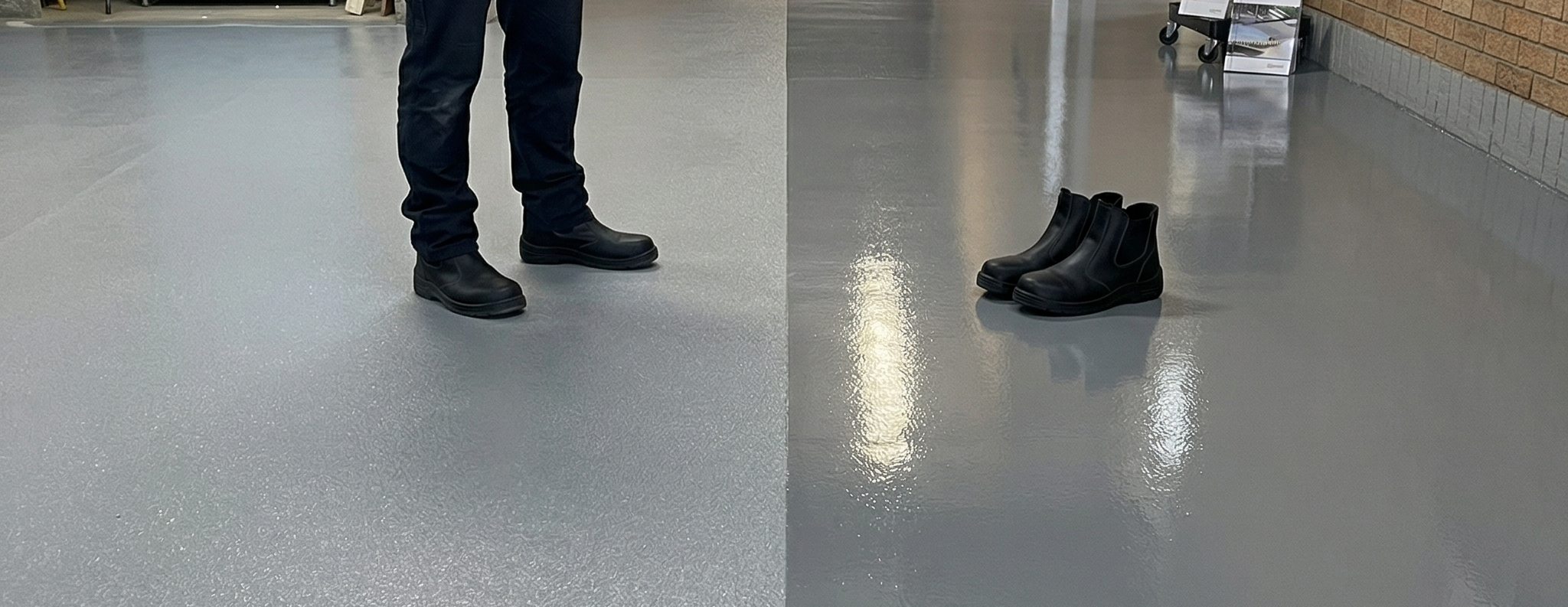
Peindre un sol en béton scelle la surface, lui donnant un aspect professionnel et éliminant la poussière. Cependant, cela rend également le béton nettement plus lisse. Ajoutez des chaussures mouillées par le mauvais temps, une boisson renversée ou quelques gouttes d'huile, et ce magnifique sol lisse devient immédiatement un risque élevé de glissade.
Que vous protégiez votre famille à la maison ou votre personnel dans un entrepôt, les risques de glissade sont une grave responsabilité. Voici notre guide simple pour décider si vous avez besoin d'un additif antidérapant et quelle qualité choisir.
1. Avez-vous vraiment besoin d'un antidérapant ?
Tous les sols n'ont pas besoin d'une adhérence supplémentaire. Une finition lisse standard est parfaite pour les environnements secs et de plain-pied comme les salons, les pièces de stockage sèches ou les showrooms à faible trafic où la facilité de nettoyage est la priorité absolue.
Cependant, vous devez envisager une finition antidérapante si votre sol présente l'une des caractéristiques suivantes :
-
Humidité : Zones exposées à la pluie, aux véhicules mouillés ou aux lavages fréquents.
-
Déversements : Ateliers manipulant de l'huile, de la graisse ou des produits chimiques.
-
Pentes : Rampes, allées en pente ou marches.
-
Accès public : Espaces commerciaux où vous êtes légalement responsable de la sécurité des visiteurs.
2. Les avantages : Maison vs. Industrie
L'ajout d'un agrégat antidérapant (petites particules en suspension dans la peinture) offre des avantages distincts selon votre environnement.
Dans l'espace résidentiel (Garages et Terrasses) :
-
Sécurité hivernale : Lorsque vous garez une voiture couverte de neige ou trempée par la pluie dans votre garage, l'eau s'accumule sur le sol. La peinture antidérapante donne à vos chaussures l'adhérence nécessaire pour sortir de la voiture en toute sécurité.
-
Adhérence extérieure : Les marches, allées et terrasses peintes peuvent facilement devenir glissantes lorsqu'elles sont mouillées ou même simplement couvertes de feuilles d'automne. Un revêtement texturé prévient les chutes douloureuses à la maison.
Dans l'espace industriel (Entrepôts et Ateliers) :
-
Adhérence des chariots élévateurs : L'époxy lisse peut faire patiner les pneus des chariots élévateurs, en particulier près des portes de quai de chargement où la pluie s'infiltre. Les sols texturés permettent aux machines lourdes de se déplacer en toute sécurité.
-
Conformité en matière de santé et de sécurité : Les glissades et les chutes sont la cause la plus fréquente de blessures au travail. Un revêtement antidérapant désigné protège votre personnel et protège votre entreprise contre les réclamations en responsabilité.
3. Choisir votre qualité : Fine, Moyenne ou Grossière
Les additifs antidérapants ne sont pas "taille unique". Ils existent en différentes qualités (tailles de particules). Le choix de la bonne qualité consiste à faire correspondre l'adhérence à la chaussure.
-
Grain fin :
-
Le toucher : Similaire à du papier de verre très fin.
-
Idéal pour : Salles de bains, buanderies, escaliers résidentiels intérieurs et allées piétonnes à faible trafic. Il offre une adhérence subtile qui n'abîmera pas les pieds nus ou les chaussures délicates.
-
Grain moyen :
-
Le toucher : Similaire à la bande antidérapante d'une planche à roulettes.
-
Idéal pour : Garages domestiques, allées, terrasses et ateliers commerciaux polyvalents. C'est le polyvalent par excellence. Il offre une excellente adhérence sous les bottes et les baskets sans être trop agressif.
-
Grain grossier :
-
Le toucher : Agressif, coupant et très texturé. (Ne marchez pas pieds nus dessus).
-
Idéal pour : Quais de chargement industriels, rampes extérieures abruptes, cuisines commerciales et itinéraires de chariots élévateurs lourds. Il est conçu pour adhérer à la graisse, à la boue lourde et à l'eau stagnante.
4. Le compromis du nettoyage
Avant de vous contenter de commander la qualité "Grossière" juste pour être sûr ; n'oubliez pas que tout dans la vie a un compromis. Avec les revêtements de sol antidérapants, l'inconvénient est que plus un sol a d'adhérence, plus il est difficile à nettoyer.
-
Sols lisses : Peuvent être essuyés sans effort avec une serpillière et un seau standard.
-
Sols fins/moyens : Nécessiteront un peu plus d'huile de coude et une serpillière plus résistante pour nettoyer le profil texturé.
-
Sols grossiers : Déchiquèteront une serpillière en coton traditionnelle. Pour nettoyer un sol industriel grossier, vous aurez besoin d'une brosse à pont rigide, d'une autolaveuse ou d'un nettoyeur haute pression.
N'achetez pas une peinture antidérapante grossière pour un sol qui doit être lavé quotidiennement, à moins que vous ne soyez prêt à changer votre routine de nettoyage. Adaptez toujours la qualité à votre niveau de risque réel.
Conclusion
Un revêtement de sol antidérapant est la police d'assurance la moins chère que vous n'achèterez jamais. En mélangeant un agrégat texturé à votre peinture, vous conservez la durabilité du revêtement tout en améliorant considérablement la sécurité de la pièce.
-
Évaluez le risque lié à l'eau et à l'huile.
-
Choisissez la qualité qui correspond à vos chaussures.
-
Équilibrez votre besoin d'adhérence avec votre besoin de nettoyage facile.
Prêt à améliorer la sécurité de votre espace ?
→ Découvrez notre Gamme d'additifs de peinture antidérapante
→ Découvrez notre Gamme de kits de peinture antidérapante pour sols
Partager:
Meilleure peinture pour les niches ? Pourquoi vous avez besoin d'un époxy bi-composant spécialisé
Quelle est la meilleure peinture pour les carreaux en pierre naturelle ? Pourquoi l'acrylique à base d'eau est le seul choix.