Made In Great Britain

Direct from our factory

Free Next Day Delivery

On orders over £750

Product Test Results

All product test results published

Expert Technical Advice

Call or chat with our team

4.9
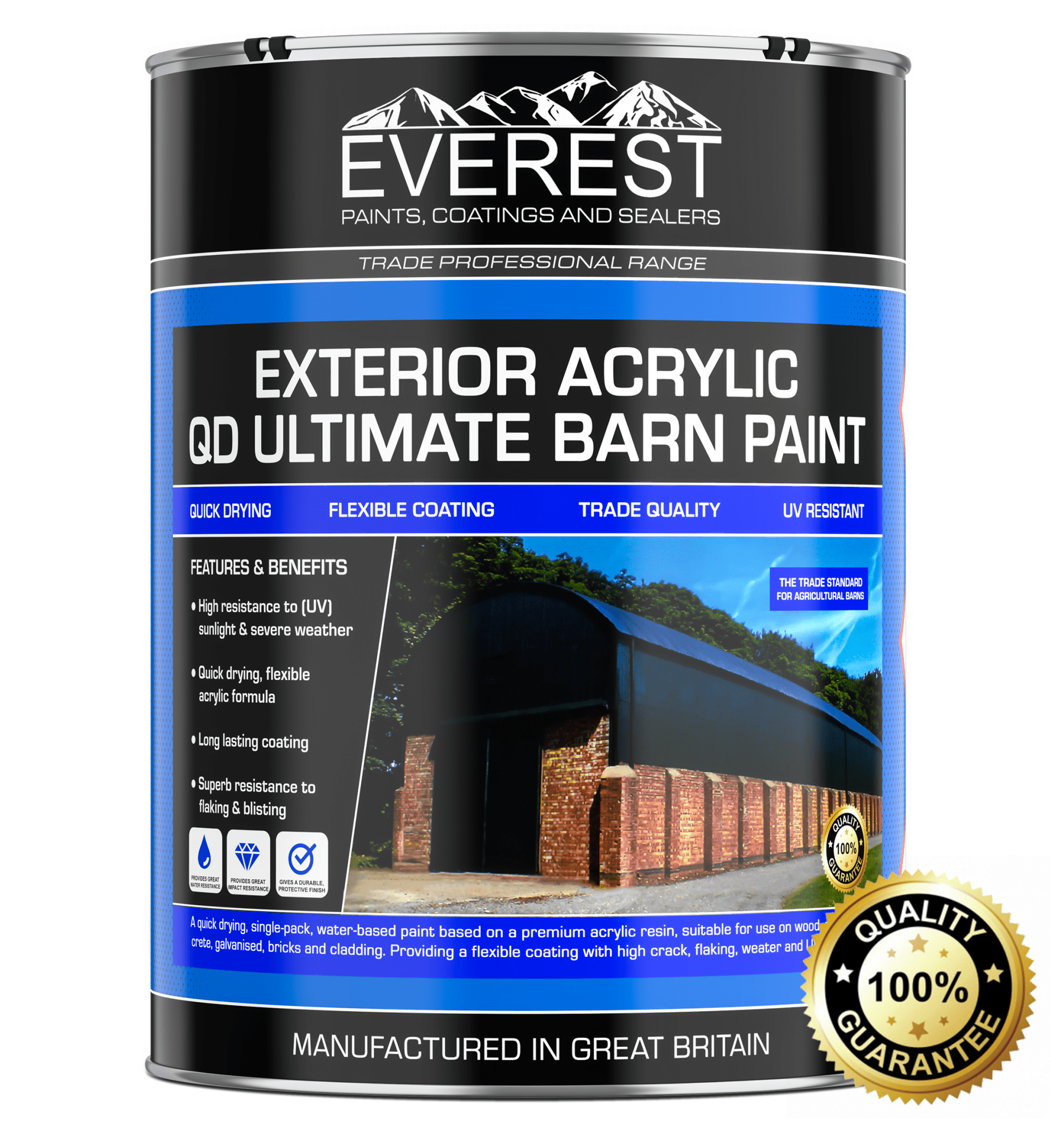
Everest - Acrylic Barn Paint - Everest Paints
Distributeur:Everest Paints
  • Noir
  • Blanc
  • Gris clair (RAL 7047)
  • Harbour Grey
  • Pebble Grey (Light Grey)
5.0
Everest - Anti - Corrosive Oxide Primer - Everest Paints
Distributeur:Everest Paints
  • Gris
  • Rouge
Everest - Oxide Gloss - Anti - Corrosive Paint - Everest Paints
Distributeur:Everest Paints
  • Gris clair
  • Cuirassé Gris
  • Gris anthracite
  • Noir
  • Vert Genévrier
5.0
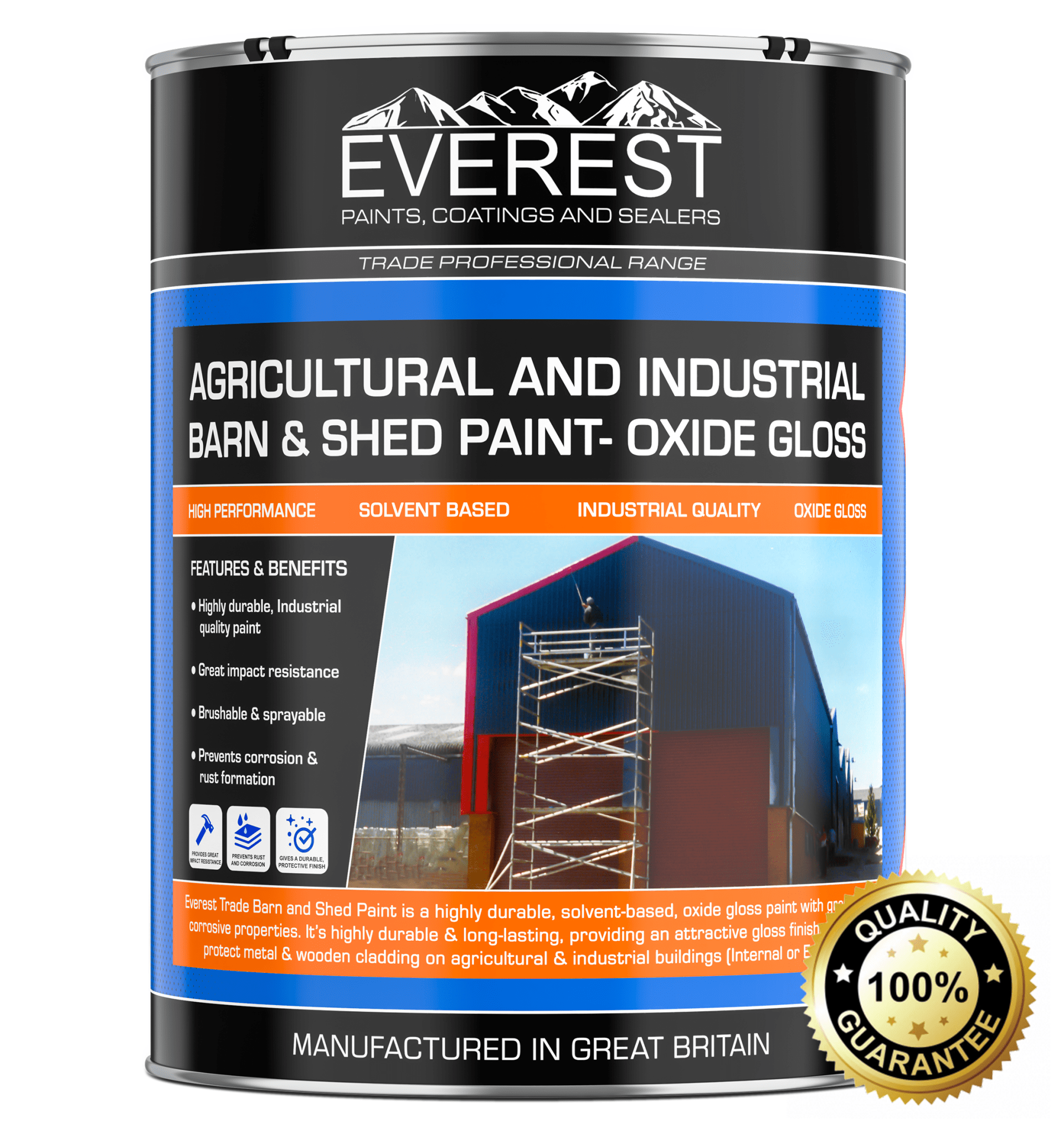
Everest - Agricultural & Industrial Barn Paint - Everest Paints
Distributeur:Everest Paints
  • Gris clair
  • Cuirassé Gris
  • Gris anthracite
  • Noir
  • Vert Genévrier
Close-up of metal structural beams with bolts against a blue sky.

Exposed Steel or Coastal Conditions?

Specify a Higher Build Anti-Corrosion System

Standard agricultural coatings rely on correct preparation and sound existing substrates. For exposed cladding or corrosion-prone steel, specify anti-corrosive oxide gloss with a dedicated anti-corrosion primer to increase film build and substrate protection.

View Anti-Corrosion Systems
En vedette
Everest - Machinery Enamel - Gloss - Everest Paints
Distributeur:Everest Paints
  • Tracteur Ford Bleu
  • Gris clair
  • Cuirassé Gris
  • Gris anthracite
  • Bureau de poste rouge
En vedette
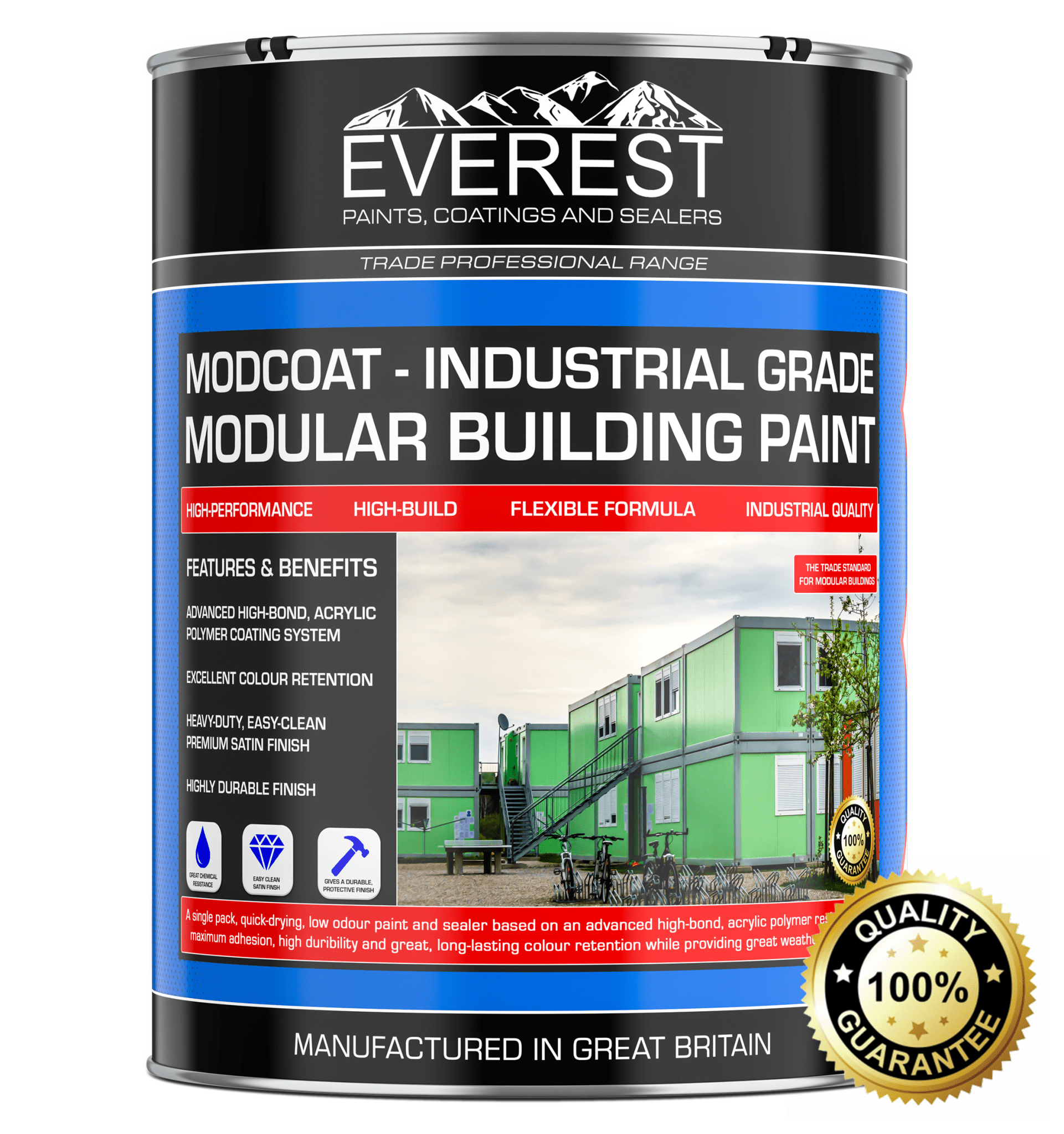
Everest - MODCOAT - HB Modular Building Coating - Everest Paints
Distributeur:Everest Paints
  • Blanc
  • Gris anthracite
  • Cuirassé Gris
  • Gris clair
  • Noir
5.0
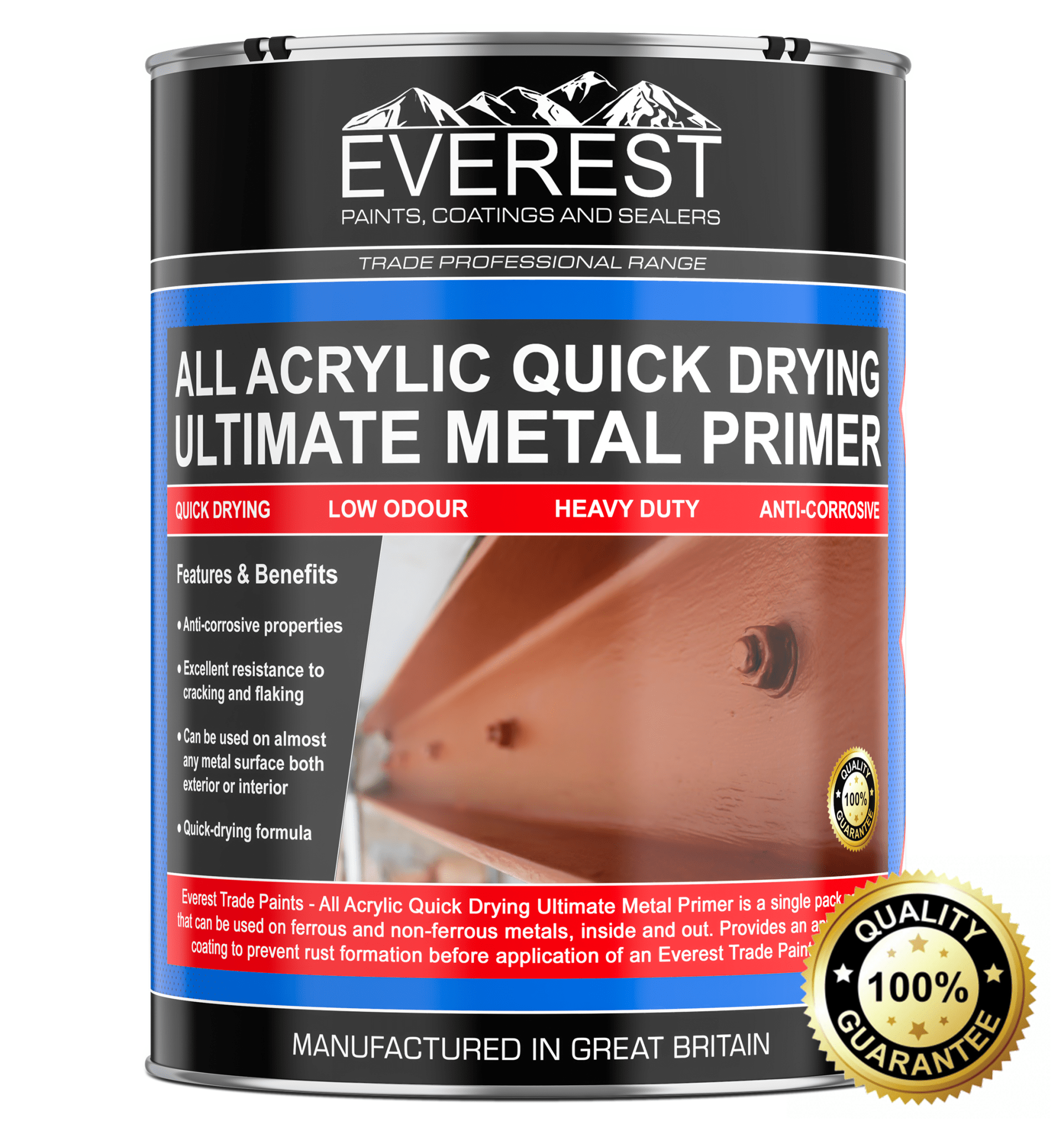
Everest - Advanced Acrylic Metal Primer - Everest Paints
Distributeur:Everest Paints
  • Gris moyen
  • Oxyde rouge
En vedette
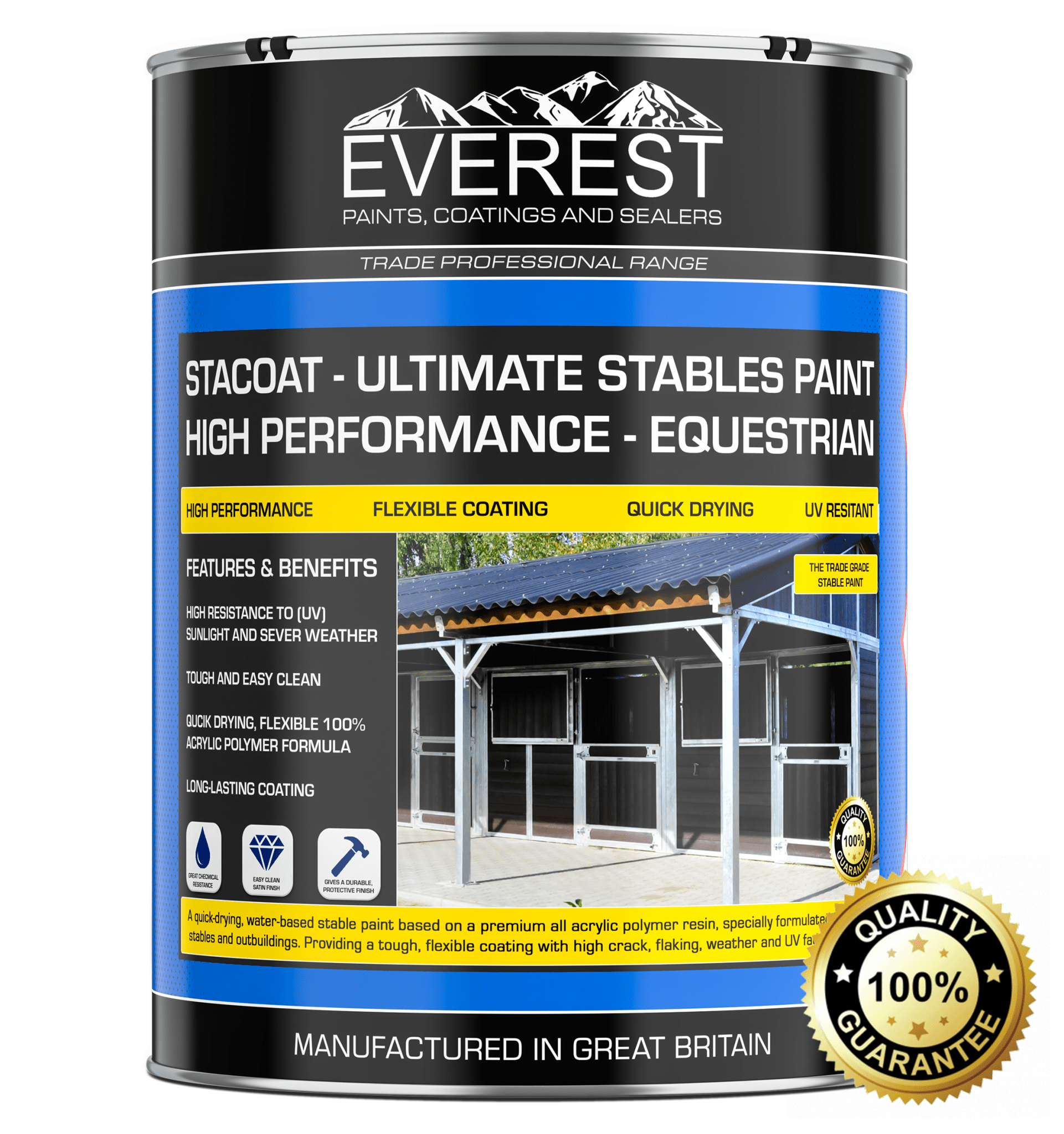
Everest - STACOAT - Ultimate Stables Paint - Everest Paints
Distributeur:Everest Paints
  • Cuirassé Gris
  • Gris clair
  • Gris perle
  • Noir
  • Blanc

Agricultural Building Paints for Steel and Cladding

Duty classification:
Heavy Duty
Suitable substrates:
Steel Cladding Tin Cladding Primed Galvanised Steel Masonry Concrete Timber and Wood

System Overview

For steel cladding, tin cladding, primed galvanised steel, masonry, concrete and timber used in agricultural buildings, protective coating systems must address weather exposure, substrate movement and long-term maintenance cycles. Agricultural building paints are formulated to provide durable external protection across mixed farm substrates while accommodating the realities of refurbishment work.

EVEREST agricultural building paints combine water-based acrylic systems and long oil gloss coatings to suit different substrate and performance demands. Acrylic technologies prioritise UV stability, colour retention and breathability on mineral backgrounds, while long oil gloss systems deliver a higher sheen, enhanced flow and durable film formation on correctly prepared metal and timber.

These systems are typically specified for barns, livestock housing exteriors, grain stores and steel-clad rural workshops where appearance, corrosion control and ease of future maintenance must be balanced.

Suitable Substrates & Surface Preparation

Steel and tin cladding must be structurally sound, free from corrosion scale and thoroughly cleaned to remove agricultural contaminants such as dust, silage residue and animal waste. Existing coatings should be checked for adhesion; loose or flaking material must be removed prior to overcoating.

Primed galvanised steel requires appropriate surface preparation and a compatible primer before application of finishing coats. Direct application to unprimed galvanised surfaces is not suitable without correct pretreatment, as adhesion failure may occur.

On masonry and concrete, surfaces should be clean, dry and free from friable material. Breathable acrylic systems are often preferred on mineral substrates where moisture vapour transmission is required. Timber and wood must be dry, stable and free from biological growth, with knots and resinous areas treated as necessary.

Across all substrates, preparation quality directly influences coating longevity. Agricultural environments introduce elevated contamination and moisture levels, making degreasing, washing and thorough drying critical steps prior to application.

Performance Characteristics & Limitations

Water-based acrylic agricultural coatings offer good UV resistance and colour stability, helping maintain a consistent external finish on cladding and masonry exposed to sunlight. Their breathable nature makes them suitable for mineral substrates where trapped moisture could otherwise lead to blistering.

Long oil gloss systems provide a durable, high-sheen finish with good flow characteristics, particularly suited to metal cladding and timber elements. The resulting film offers effective weather resistance and is appropriate for routine maintenance cycles in rural settings.

These coatings are designed for external atmospheric exposure rather than continuous chemical contact. They are not intended for immersion, persistent slurry contact or aggressive chemical environments. In high-corrosion zones, such as coastal or heavily fertiliser-exposed structures, enhanced anti-corrosion primer systems may be required beneath the finish coat.

Mechanical damage from livestock, equipment or impact will reduce service life, particularly where edges and fixings are not adequately detailed or primed.

Internal vs External Considerations

This collection is intended for external use on agricultural buildings. Coating selection should account for prevailing weather, wind-driven rain and temperature fluctuations common in rural locations.

Application should be scheduled to avoid high humidity, rainfall or cold conditions that may interfere with curing and film formation, particularly with water-based acrylic systems. Long oil gloss coatings require adequate drying time and ventilation where partial enclosure exists.

Although some products may be physically applied inside open agricultural structures, they are not formulated as hygienic or specialist internal containment coatings. Where internal livestock areas demand enhanced washdown resistance or chemical durability, more specialised systems should be assessed.

Selection Guidance & When to Specify Alternatives

Agricultural building paints for cladding are typically specified for refurbishment of existing farm structures where substrate diversity and cost control are key considerations. They are well suited to routine maintenance programmes, colour changes and protective overcoating of weathered but sound surfaces.

Where extended service life is required in highly exposed or corrosive environments, upgrading to a higher-build anti-corrosion primer system beneath the topcoat should be considered. For severely corroded steel or structures in aggressive coastal or industrial atmospheres, more advanced exterior metal coating systems may offer improved long-term protection.

Correct system design should account for substrate type, existing coating condition, environmental exposure and maintenance expectations. A surface-led specification approach ensures that agricultural buildings receive appropriate protection without over- or under-specifying the coating system.

Agricultural Building Paints FAQs

View All FAQ's

Technical Guidance & Application Advice

Agricultural building paints for cladding must be selected and applied with full consideration of substrate type, existing coating condition and environmental exposure. Preparation standards directly influence adhesion, corrosion control and long-term weather resistance, particularly on metal and previously painted surfaces. Acrylic and long oil systems behave differently in terms of flexibility, sheen retention and breathability, so system selection should reflect both substrate movement and expected duty level.

Can these systems be applied directly to weathered steel or tin cladding on farm buildings?

Bare or weathered steel and tin cladding must be mechanically prepared to remove rust, loose mill scale and failing coatings before application. Areas of corrosion should be treated with an appropriate anti-corrosion primer prior to overcoating. Direct application to unprepared metal will result in premature adhesion loss and underfilm corrosion. Where existing coatings remain sound and well adhered, they should be abraded to provide a key. System longevity depends on preparation standard and correct primer specification.

Are agricultural building paints suitable for unprimed galvanised steel cladding?

Unprimed galvanised steel requires specific preparation and a compatible galvanised metal primer before application of either acrylic or long oil gloss systems. New galvanising should be allowed to weather or be treated to remove passivation layers. Without appropriate priming, adhesion failure is likely. A dedicated primer promotes bond strength and reduces the risk of flaking or peeling. Always assess the condition of existing coatings on older galvanised sheets before refurbishment.

Which system is more appropriate for masonry or concrete agricultural buildings?

For masonry and concrete substrates, water-based acrylic systems are generally more suitable due to their breathability and UV stability. Mineral substrates can retain moisture, and a breathable coating helps reduce the risk of blistering or trapped moisture. Surfaces must be clean, dry and free from friable material. Where the substrate is powdery or highly porous, a stabilising primer should be applied first. Long oil gloss systems are typically better suited to metal or timber rather than bare mineral surfaces.

How do these coatings perform in exposed rural environments with high UV and weather exposure?

Water-based acrylic systems offer good colour stability and resistance to UV degradation, making them appropriate for exposed cladding and façades. Long oil gloss systems provide durable, high-sheen finishes with good weathering characteristics when correctly maintained. However, in coastal or severely exposed locations, higher build anti-corrosion primer systems may be required beneath the topcoat to extend service life. Regular inspection and maintenance remain essential in aggressive environments.

Can these paints be used on livestock housing exteriors where cleaning and occasional contamination occur?

These systems are suitable for external walls and cladding of livestock buildings, provided exposure is atmospheric rather than continuous chemical contact. They are not designed for immersion, constant slurry contact or aggressive chemical washing regimes. Surfaces should be thoroughly cleaned of organic contamination before application. In areas subject to frequent washdown or chemical exposure, a more chemically resistant coating system may be required to maintain integrity.

Is it acceptable to overcoat existing agricultural building paint during refurbishment?

Overcoating is possible where the existing coating remains sound, clean and firmly adhered. All loose or flaking material must be removed, and glossy surfaces abraded to provide mechanical key. Any areas of exposed metal should be spot primed with an appropriate anti-corrosion primer. Compatibility between old and new coatings should be assessed, particularly when changing from solvent-based to water-based systems. Patch testing is advisable where coating history is uncertain.

Didn’t find your answer?

Don't hestitate to contact us

Expert Advice & Guides

A few of our most recent guides applicable to this product range.

View Technical Hub

Cette section ne contient actuellement aucun contenu. Ajoutez-en en utilisant la barre latérale.