

Guides et Billets
De Produits
Catégories d'aide
Personnel serviable
Solutions expertes pour les fissures, l'humidité et les surfaces instables.
Découvrez votre guide de préparation de maçonnerie
Les murs extérieurs sont soumis aux conditions les plus rudes. Que vous ayez des problèmes d'humidité pénétrante dans la maçonnerie, des enduits "soufflés" ou une surface crayeuse qui a besoin d'être stabilisée, la bonne préparation fait la différence entre une finition qui dure 10 ans et un échec. Cherchez ci-dessous pour trouver la méthode de réparation spécifique à votre bâtiment.
- 0 commentaire
- par Sam Marriott
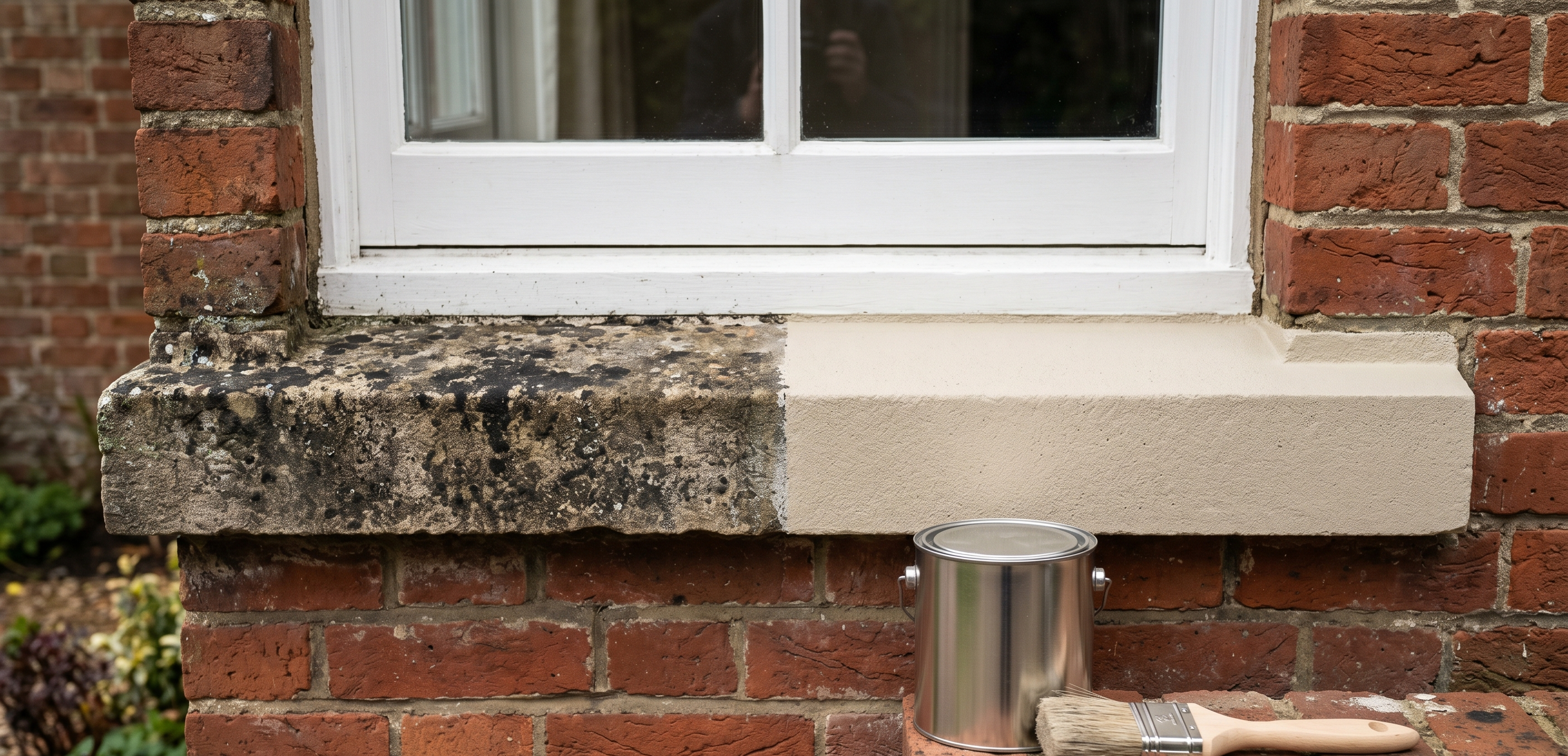
Restauration des linteaux et appuis en pierre reconstituée : Guide de nettoyage et de peinture

- 0 commentaire
- par Sam Marriott

- 0 commentaire
- par Sam Marriott
Stopper l'humidité ascensionnelle : Explication des hydrofuges transparents

- 0 commentaire
- par Sam Marriott
Comment apprêter correctement les parpaings pour la peinture, surfaces à faible porosité

- 0 commentaire
- par Sam Marriott
Méthodes de nettoyage sûres pour l'enduit fragile

- 0 commentaire
- par Sam Marriott
Préparation des briques courantes pour l'adhérence

- 0 commentaire
- par Sam Marriott
Combler les défauts profonds : réparation au mortier ou Polyfilla extérieur

- 0 commentaire
- par Sam Marriott
Réparer un enduit cloqué : Boucher les trous avant de peindre

- 0 commentaire
- par Sam Marriott
Primaire pour enduit poreux : comment éviter l'absorption et la peinture non uniforme

- 0 commentaire
- par Sam Marriott
Le test du ruban adhésif : diagnostiquer la maçonnerie instable avant de peindre

- 0 commentaire
- par Sam Marriott
Stabiliser les apprêts : Comment réparer la maçonnerie crayeuse et poussiéreuse

- 0 commentaire
- par Sam Marriott

- 0 commentaire
- par Sam Marriott
Réfection des joints de terrasse : mortier ou composés de jointoiement à balayer
No guides found matching your search.
Try a different keyword.
Rénover des murs poudreux, friables ou farineux
Stabilisation et préparation
La cause n°1 de l'échec d'une peinture de maçonnerie est son application sur une surface « poussiéreuse ». Cette section traite des solutions de stabilisation, des apprêts à pénétration profonde qui lient l'enduit friable et la peinture farineuse pour créer une base solide pour la couche de finition.
Rebouchage des fissures, trous et enduits décollés
Réparations de Maçonnerie
Ne peignez jamais sur une fissure. Cette section vous guidera à travers l'ouverture des fissures capillaires (la méthode de la découpe en V), le choix des bons enduits de rebouchage extérieur flexibles et le colmatage de l'enduit « soufflé » ou creux avant de prendre un pinceau.
Scellants transparents et hydrofuges
Étanchéité et préparation contre l'humidité
Tout le monde ne veut pas de peinture colorée. Découvrez comment utiliser les imprégnateurs Silane/Siloxane pour imperméabiliser la brique et la pierre sans en changer l'apparence. Une préparation essentielle pour prévenir l'humidité ascensionnelle.
Crépi, Tyrollienne & Enduit rustique
Préparation spécifique au substrat
Peindre un enduit lisse est facile ; peindre un enduit granuleux est un défi. Cette section couvre le « Bagging » (revêtement à la boue) pour lisser les murs, et les techniques de préparation spécifiques pour les surfaces très texturées.
Réponses d'experts sur la stabilisation, la réparation et l'étanchéité des murs extérieurs.
Préparation de maçonnerie FAQ
Stabilisation (murs farineux et poussiéreux)
La première raison pour laquelle la peinture de maçonnerie s'écaille est une surface « friable ». À mesure que l'ancienne peinture vieillit, le liant se décompose, laissant un résidu poudreux. Si vous peignez directement sur cette couche crayeuse, la nouvelle peinture adhère à la poussière, et non au mur, et finira par se décoller.
Comment savoir si mon mur a besoin d'un primaire de stabilisation ?
Faites le « test du pouce ». Frottez fermement votre paume ou votre pouce sur la surface peinte existante. Si votre main ressort blanche ou poudreuse, la surface « s’écaille ». Vous devez la nettoyer et appliquer une solution stabilisatrice pour lier les particules libres avant de peindre.
Dois-je utiliser un stabilisateur à base d'eau ou à base de solvant ?
Cela dépend de la gravité du problème.
- À base de solvant (haute performance) : Requis pour les surfaces très farineuses, anciennes ou très poreuses. Les particules de solvant sont plus petites et pénètrent plus profondément pour lier la surface.
- À base d'eau (écologique) : Convient aux surfaces légèrement poussiéreuses ou aux enduits plus récents qui nécessitent simplement une légère étanchéité.
Puis-je simplement diluer ma peinture pour maçonnerie au lieu d'acheter un apprêt ?
Sur un enduit nu et sain, une « couche d'accrochage » (peinture diluée) est souvent suffisante. Cependant, sur des surfaces farineuses ou qui s'écaillent, la peinture diluée ne suffit pas. Vous avez besoin des résines liantes spécifiques que l'on trouve dans une solution stabilisatrice pour recoller la surface.
Réparations (fissures et enduit soufflé)
Les murs extérieurs se déplacent avec la dilatation et la contraction thermiques. Les charges rigides (comme le ciment standard) se fissurent et tombent souvent parce qu'elles ne peuvent pas supporter ce mouvement. Une réparation de maçonnerie réussie nécessite des matériaux flexibles qui se déplacent avec le bâtiment.
Puis-je simplement peindre sur les fissures capillaires ?
Non. La peinture est une fine couche, pas un bouche-pores. Même si la peinture colmate la fissure initialement, elle s'ouvrira dès que le temps changera. Vous devriez boucher les fissures capillaires avec un enduit acrylique extérieur flexible ou utiliser un revêtement renforcé "High Build" conçu pour colmater les petites fissures.
Qu'est-ce qu'un enduit « Blown » et comment le trouver ?
Un enduit « soufflé » signifie que l'enduit s'est détaché de la maçonnerie qui se trouve derrière, laissant une poche d'air creuse. Vous pouvez le détecter en tapotant le mur avec le manche d'un marteau ; le son sera creux par rapport au « bruit sourd » et solide d'un bon enduit. Ces zones doivent être démolies et réparées, sinon elles finiront par tomber.
Dois-je utiliser du mastic silicone pour les fissures ?
Ne jamais utiliser de mastic silicone standard sur les zones que vous avez l'intention de peindre. La peinture n'adhère pas au silicone (elle le repousse), vous laissant une vilaine bande non peinte. Toujours utiliser un enduit extérieur ou un mastic polyuréthane "peignable".
Étanchéité et Humidité
L'humidité pénétrante se produit lorsque la pluie s'infiltre à travers les pores de la brique ou de la pierre. Les hydrofuges incolores (imprégnateurs) sont le meilleur moyen d'arrêter cela sans altérer l'apparence de votre maison.
Un produit d'étanchéité modifiera-t-il la couleur de ma maçonnerie ?
Un hydrofuge silane/siloxane de haute qualité doit sécher en toute transparence et invisibilité (mat). Il pénètre dans la brique plutôt que de rester en surface comme un vernis. Cependant, les scellants "de type vernis" moins chers peuvent laisser un "aspect mouillé" ou brillant, alors vérifiez toujours l'étiquette ou faites un essai sur une petite surface.
Puis-je peindre sur un imperméabilisant plus tard ?
Généralement, non. Les hydrofuges sont conçus pour repousser les liquides, y compris la peinture liquide. Si vous imperméabilisez votre mur maintenant, vous ne pourrez peut-être pas le peindre avant 5 à 10 ans, jusqu'à ce que le scellant s'estompe. Décidez si vous voulez un aspect naturel (scellant transparent) ou un aspect coloré (peinture de maçonnerie) avant de commencer.
Quelle est la différence entre l'humidité ascensionnelle et l'humidité pénétrante ?
L'humidité ascensionnelle provient du sol (s'arrêtant généralement à 1 mètre de hauteur) en raison d'une rupture de la barrière d'étanchéité. L'humidité pénétrante peut apparaître n'importe où sur le mur (même en hauteur) et est causée par l'infiltration de la pluie à travers des briques poreuses ou des fissures. Nos scellants sont conçus pour arrêter l'humidité pénétrante.

Le Centre d'aide et technique
Nos revêtements sont bien plus qu’une simple question de performance. Ils sont assortis d’une documentation claire, de guides pratiques et d’un véritable soutien technique.
Le Centre d’aide et de ressources techniques regroupe des guides de préparation, des conseils d’application, des FAQ, des téléchargements de fiches de données de sécurité et de fiches techniques, ainsi que des recommandations de systèmes pour vous aider à choisir, appliquer et entretenir le bon revêtement en toute confiance.