System Overview
For concrete and asphalt surfaces in school playgrounds and public access areas, durable coating systems are used to create safe, visible, and maintainable surfaces capable of withstanding frequent pedestrian activity. These coatings provide a protective film across prepared substrates while allowing the application of coloured zones, safety markings, and recreational play areas.
Public environments such as playgrounds, walkways, and community recreation spaces experience continuous foot traffic and repeated surface wear. Bare mineral substrates can gradually degrade or lose visual clarity for safety markings if left unprotected. Surface coating systems improve durability while supporting clear visual organisation of public spaces.
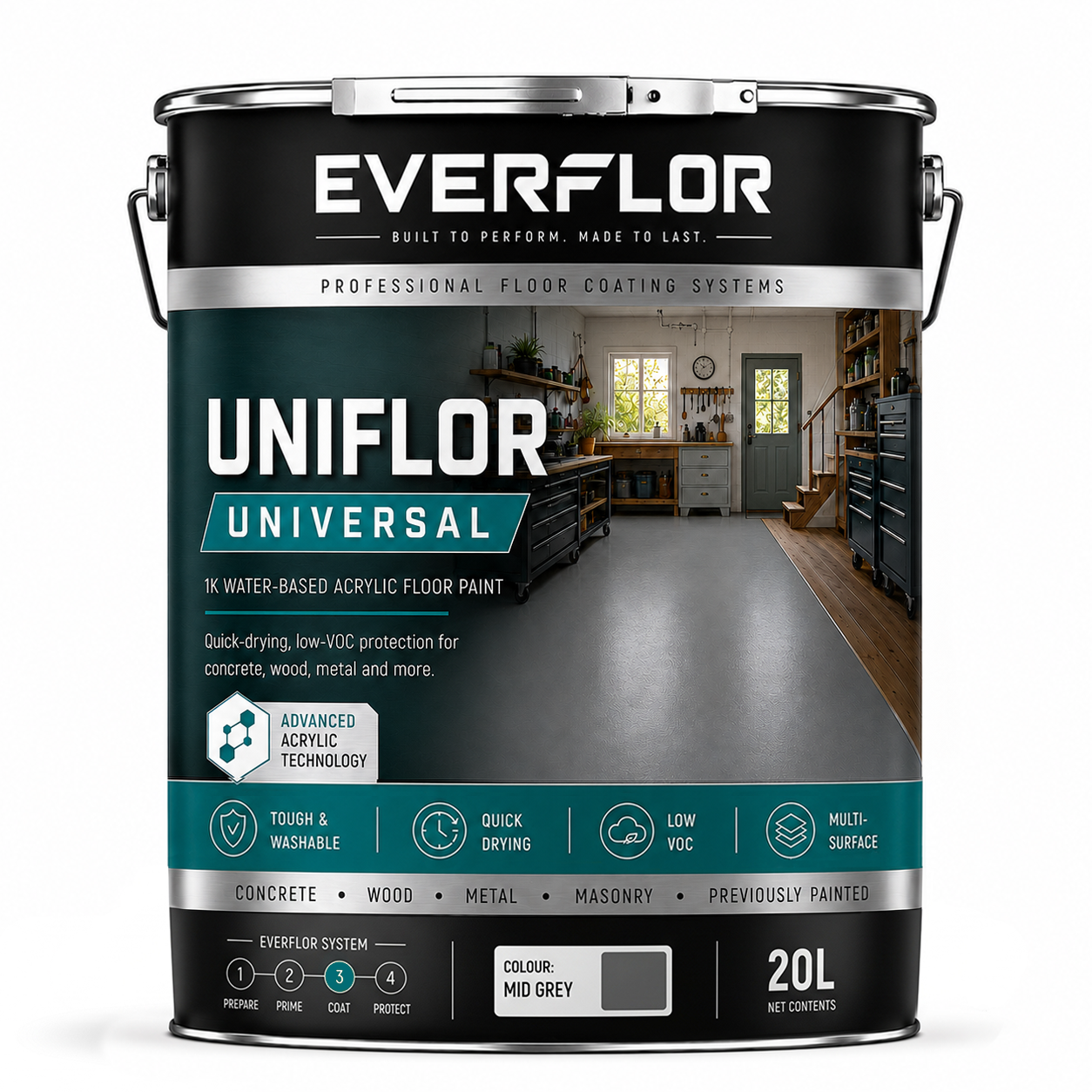
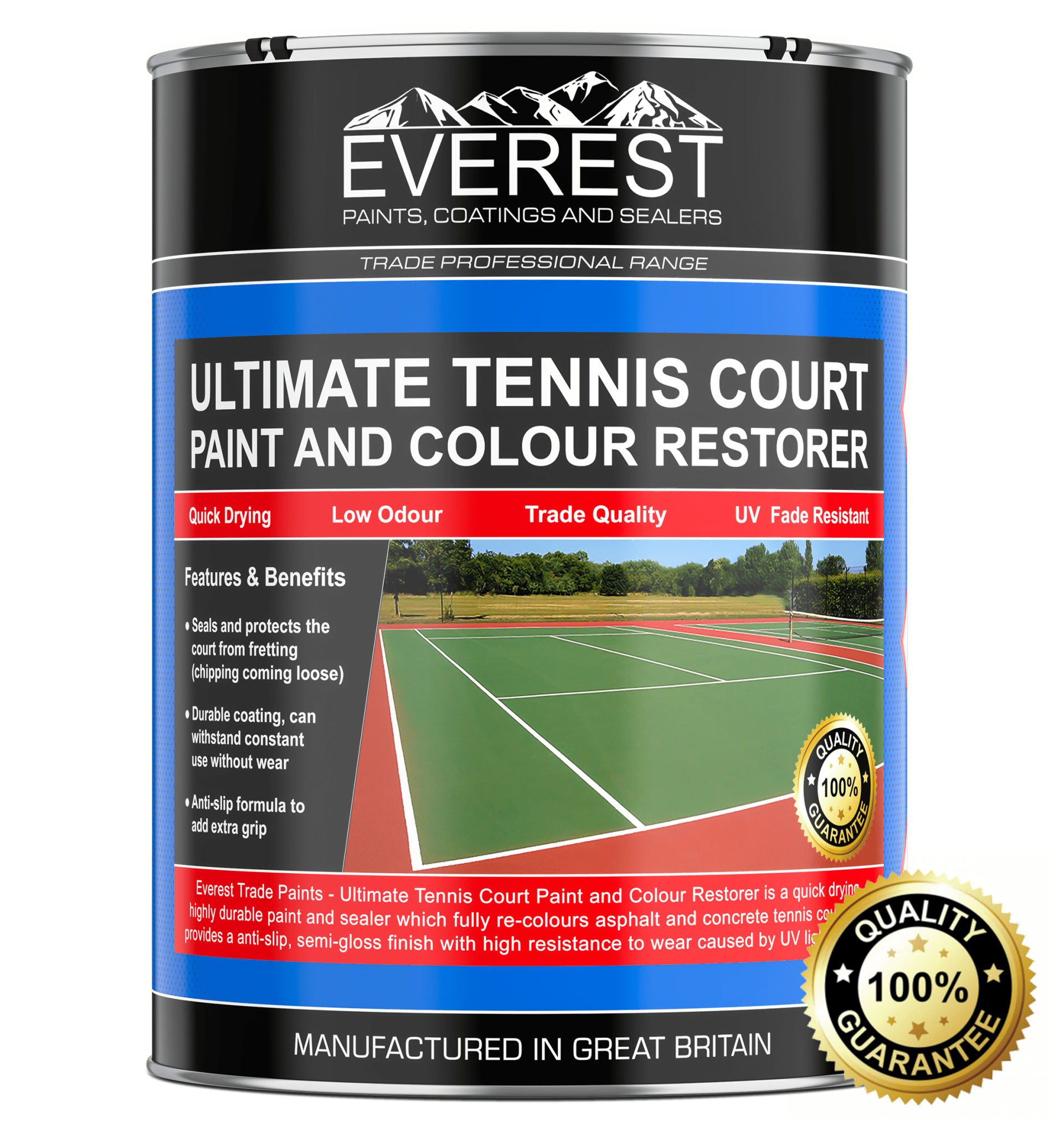
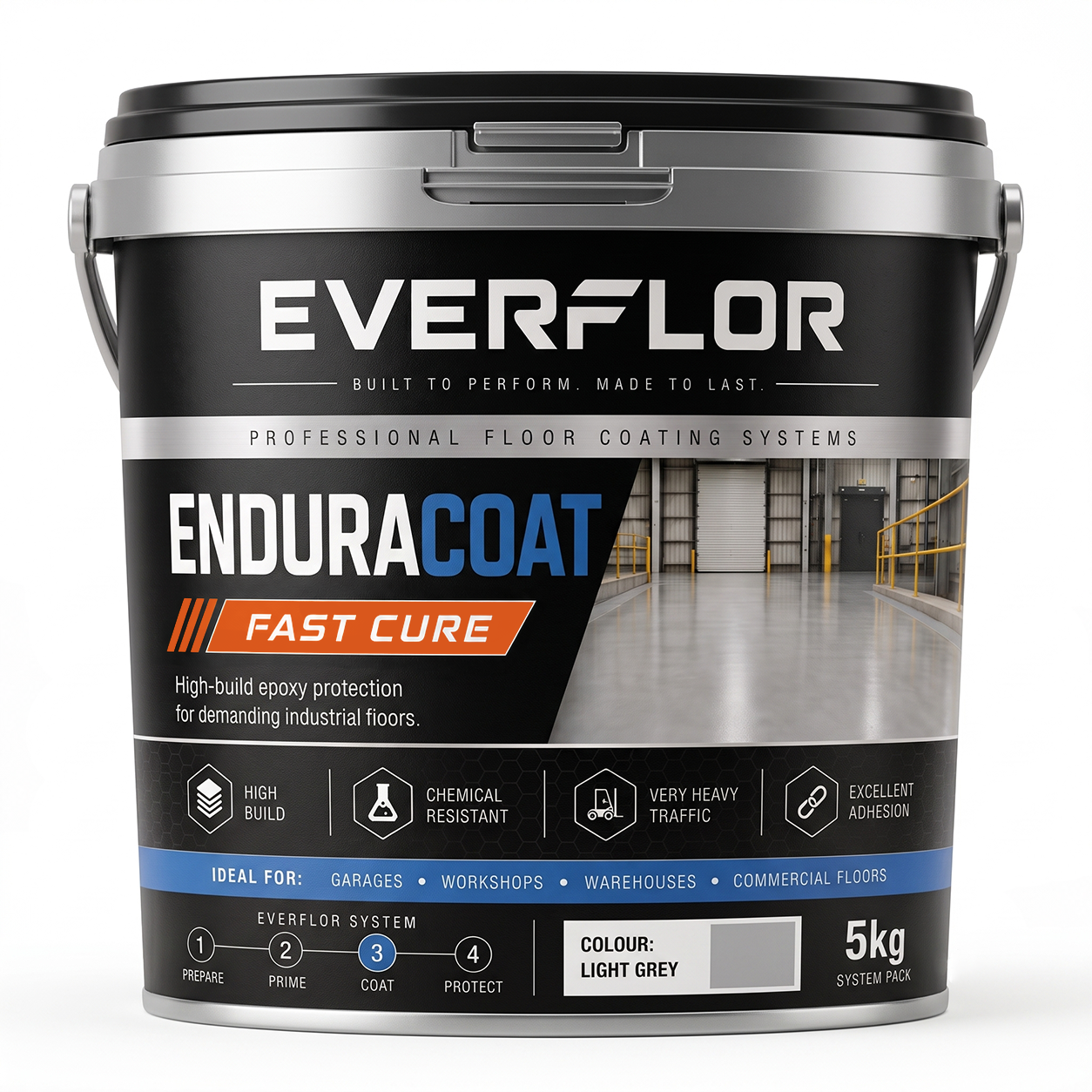
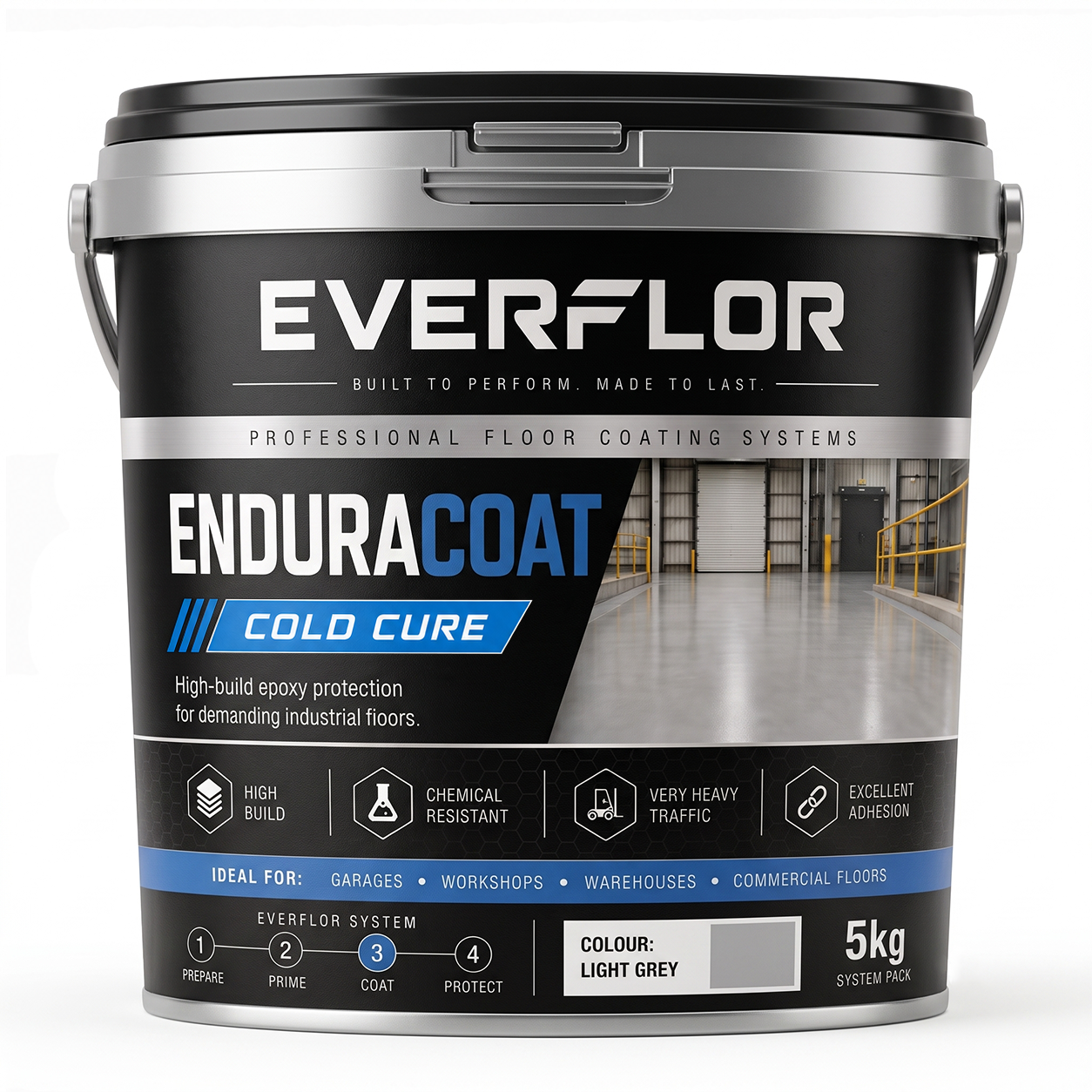
EVEREST and EVEREST Everflor coatings for schools and public areas incorporate water-based acrylic, epoxy, and polyurethane technologies depending on the performance requirements of the surface. Acrylic systems are commonly used for coloured outdoor play areas and pedestrian spaces, while epoxy and polyurethane coatings may be specified where improved abrasion resistance is required on prepared mineral substrates.
These coatings allow surfaces to function both as protective finishes and as visual guidance systems for safety, recreation, and pedestrian movement.
Suitable Substrates & Surface Preparation
Concrete and asphalt are the primary substrates used in playgrounds, pedestrian walkways, and public access areas. Correct preparation of these surfaces is necessary to ensure reliable adhesion and long-term durability of the coating system.
Concrete surfaces should be clean, dry, and free from dust, grease, oils, and loose material prior to coating. Mechanical cleaning or pressure washing may be required to remove contamination or surface deposits. Smooth concrete surfaces may require light abrasion to improve coating adhesion.
Asphalt surfaces should be stable and free from loose aggregate or surface oils. Newly laid asphalt may require a curing period before coatings can be applied, as residual binders can interfere with coating performance.
Previously coated surfaces can often be recoated where the existing coating remains well adhered. Loose or deteriorated coatings should be removed and the surface cleaned before applying new coating layers.
Surface defects such as cracks or unstable areas should be repaired prior to coating to maintain consistent durability across the finished surface.
Performance Characteristics & Limitations
Coatings used in school playgrounds and public areas are designed to provide durable coloured surfaces capable of withstanding frequent pedestrian traffic and outdoor exposure. The coating film helps protect the substrate while maintaining colour clarity for safety zones, recreational markings, and walkway delineation.
Water-based acrylic coatings are widely used for playground and recreational surfaces due to their weather resistance and colour stability under outdoor conditions. These systems can produce durable coloured surfaces suitable for games areas and pedestrian circulation zones.
Epoxy coatings may be specified for internal public environments or areas where greater abrasion resistance is required. Polyurethane coatings can also provide enhanced wear resistance and flexibility where surfaces experience higher levels of mechanical wear.
Despite their durability, coatings in this category are intended primarily for pedestrian traffic rather than heavy vehicle loads. Continuous vehicle traffic or industrial mechanical wear may exceed the performance limits of standard playground and public area coatings.
Internal vs External Considerations
School and public area coatings may be applied in both exterior and interior environments depending on the facility layout. Outdoor playgrounds, recreational courts, and pedestrian walkways require coatings that resist weather exposure, UV radiation, and temperature variation.
Acrylic-based coatings are commonly used in exterior environments due to their ability to maintain colour stability and flexibility under outdoor conditions.
Interior public areas such as indoor recreation spaces or community facilities may require coatings with greater abrasion resistance to withstand repeated foot traffic and routine cleaning. Epoxy or polyurethane coatings may be used in these environments to provide additional durability.
Environmental exposure, traffic intensity, and the function of the space should all be considered when selecting a suitable coating system.
Selection Guidance & When to Specify Alternatives
Surface coatings for schools and public areas are typically specified where durable coloured surfaces are required for safety guidance, pedestrian circulation, and recreational use. These systems help maintain visible play areas, walkway zones, and community recreation spaces while protecting the underlying substrate.
They are commonly used in school playgrounds, multi-use games areas, community courts, pedestrian paths, and public access spaces where consistent surface appearance and durability are important.
However, where surfaces experience particularly high levels of foot traffic or require extended service intervals, more durable resin coating systems may be appropriate. Epoxy or polyurethane floor coatings can provide improved abrasion resistance in areas subject to heavier use.
Selecting the appropriate system should consider substrate type, traffic intensity, and environmental exposure to ensure the coating provides reliable long-term performance in public environments.