

Made In Great Britain

Direct from our factory

Free Next Day Delivery

On orders over £750

Product Test Results

All test results published

Expert Technical Advice

Call or chat with our team

130+

Guides and Posts

100's

Of Products

30+

Help Categories

10+

Helpful Staff

Instant Access to Expert Methods

Find Your Preparation Strategy

Planning a new installation or troubleshooting an old floor? Whether you need standard operating procedures for grinding and etching, or specific fixes for damp and oil, find the exact guide you need below.

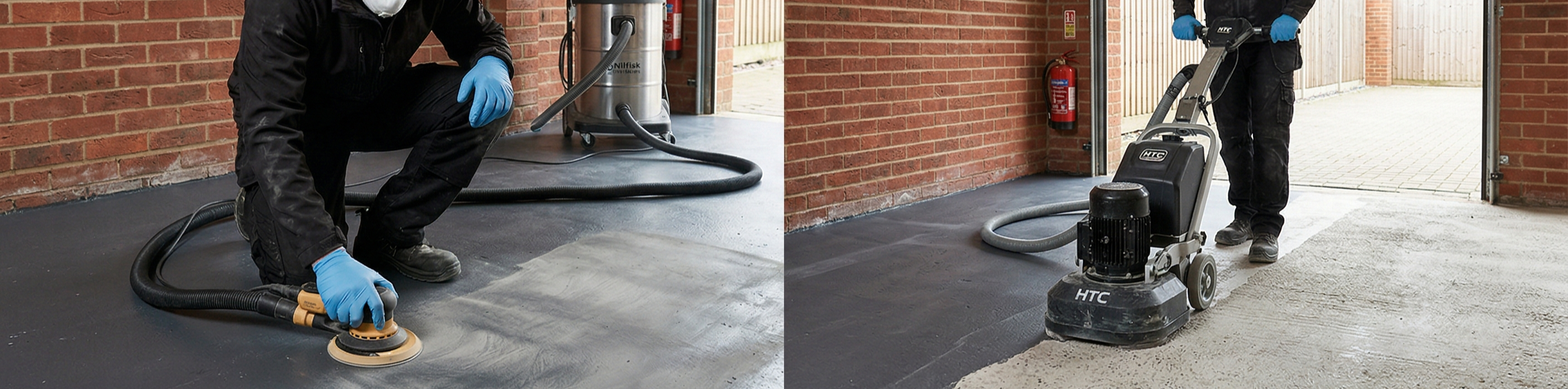
How to Sand a Painted Concrete Floor for Recoating
How to Sand a Painted Concrete Floor for Recoating

In our Sanding vs. Grinding: Preparing Previously Painted Concrete guide, we established that if your floor passes the Cross-Hatch Adhesion Test, then the next step for recoating will be sanding. Choosing to sand rather than grind saves you hundreds of pounds in equipment rental and diamond consumables....
Read more

Comparing orbital sanding and diamond grinding to prepare a previously painted concrete floor in the UK.

Sanding vs. Grinding: Preparing Previously Painted Concrete

When you are faced with a floor that is already painted, you have a critical decision to make. Do you rough it up and paint over it? Or do you strip it back to the bare concrete and start fresh?...

Read more

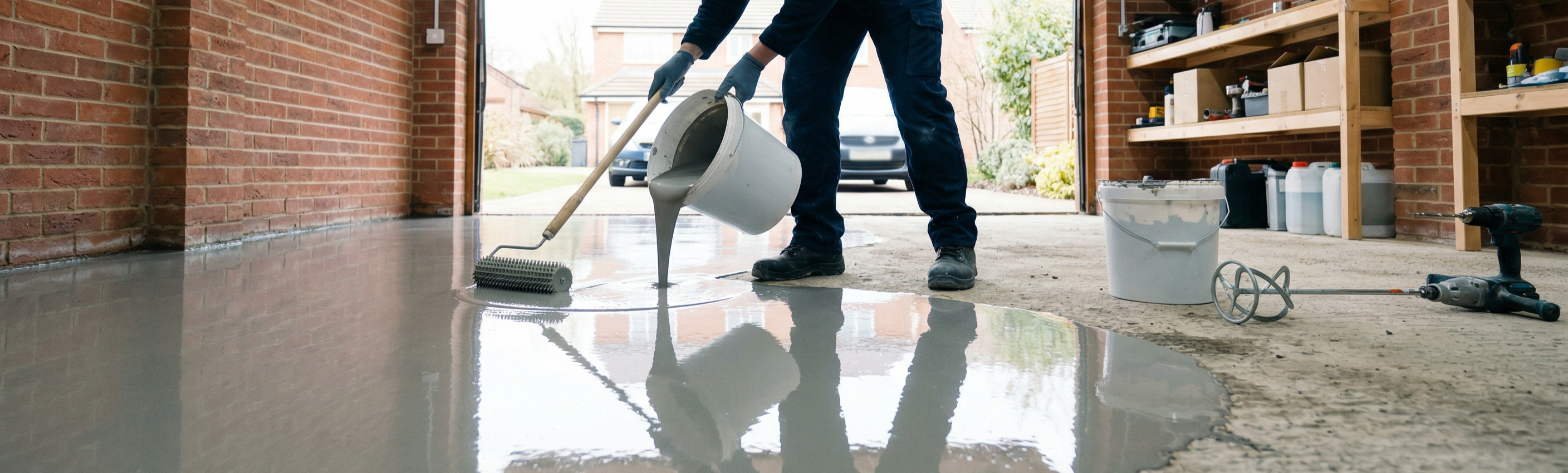
Pouring a professional self-leveling compound onto an uneven concrete garage floor in the UK.

Restoring Uneven Floors with Self-Levelling Compounds
There is a hard rule in the flooring industry: High-gloss paint shows everything. If your garage floor is pitted, wavy, or rough like a moonscape, applying a shiny Epoxy Floor Paint will not hide those imperfections. It will highlight them. The...

Read more

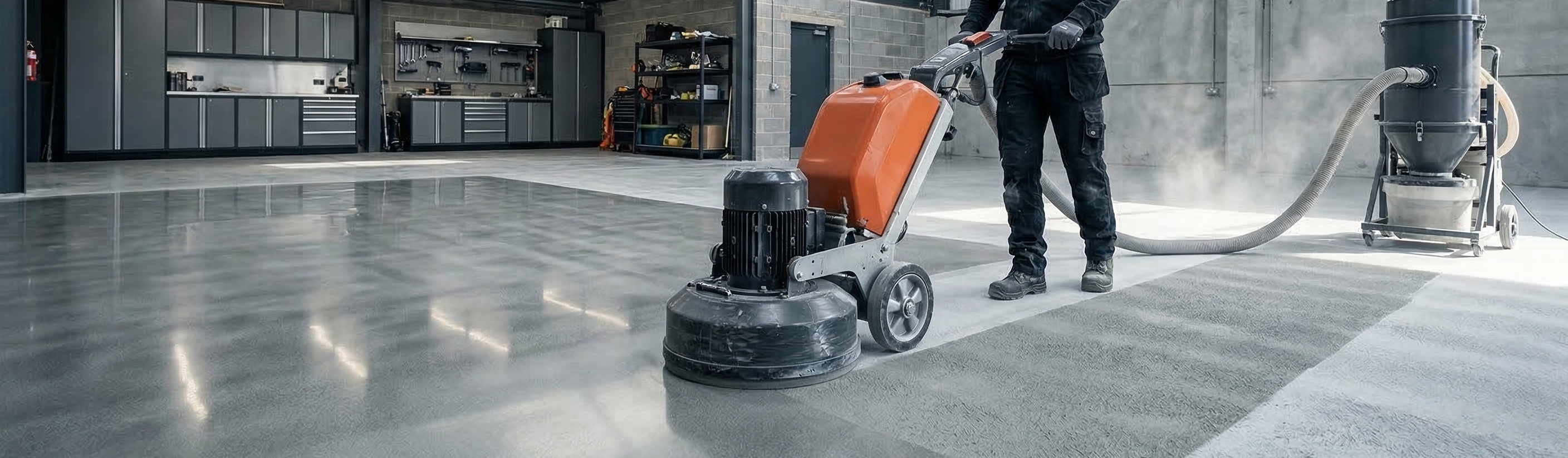
Professional diamond grinding of a smooth power-floated concrete floor to create a mechanical key for painting.

Mechanical Keying: Preparing Power-Floated Concrete
You walk into a newly built warehouse or a high-spec garage. The concrete floor is stunning. It is polished, dark grey, and so smooth it shines like glass. You think: "This will be easy to paint. It’s already flat." Stop....

Read more

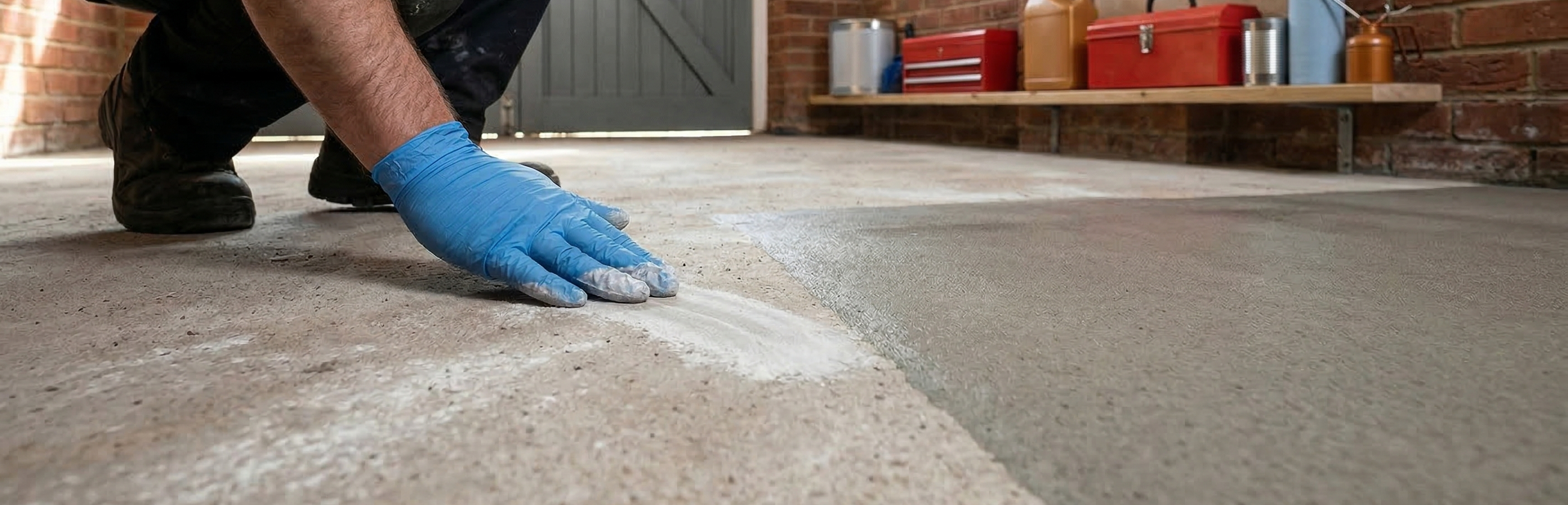
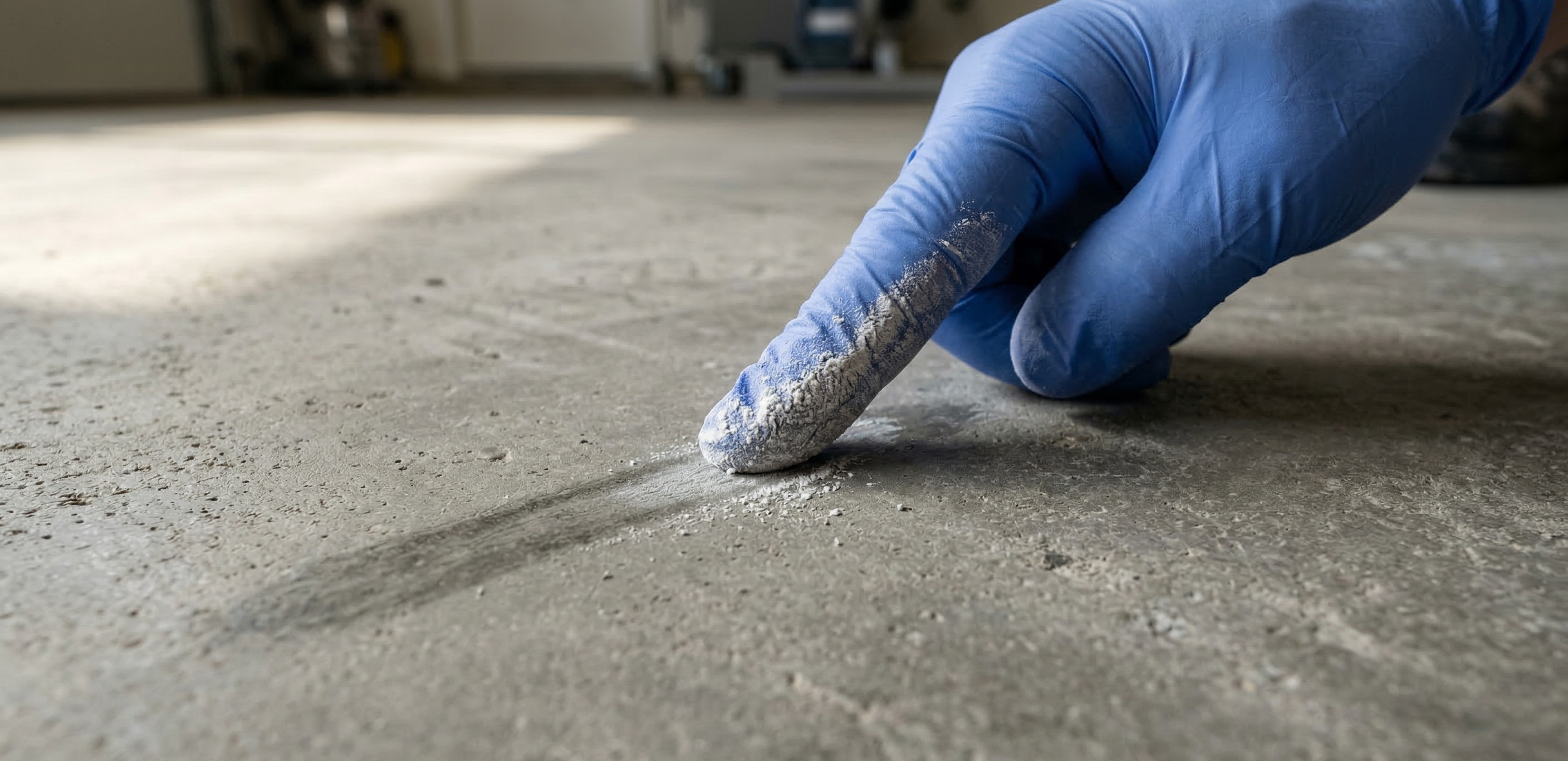
Identifying dusting concrete on a UK garage floor by checking for white chalky residue on fingertips.

Dealing with "Dusting" Concrete: Hardening Weak Surfaces
You sweep your garage floor on Saturday morning. By Sunday afternoon, there is a fine layer of white grit covering your car again. You blame the wind, or dirt tracking in from outside. But if you look closely, that grit...

Read more

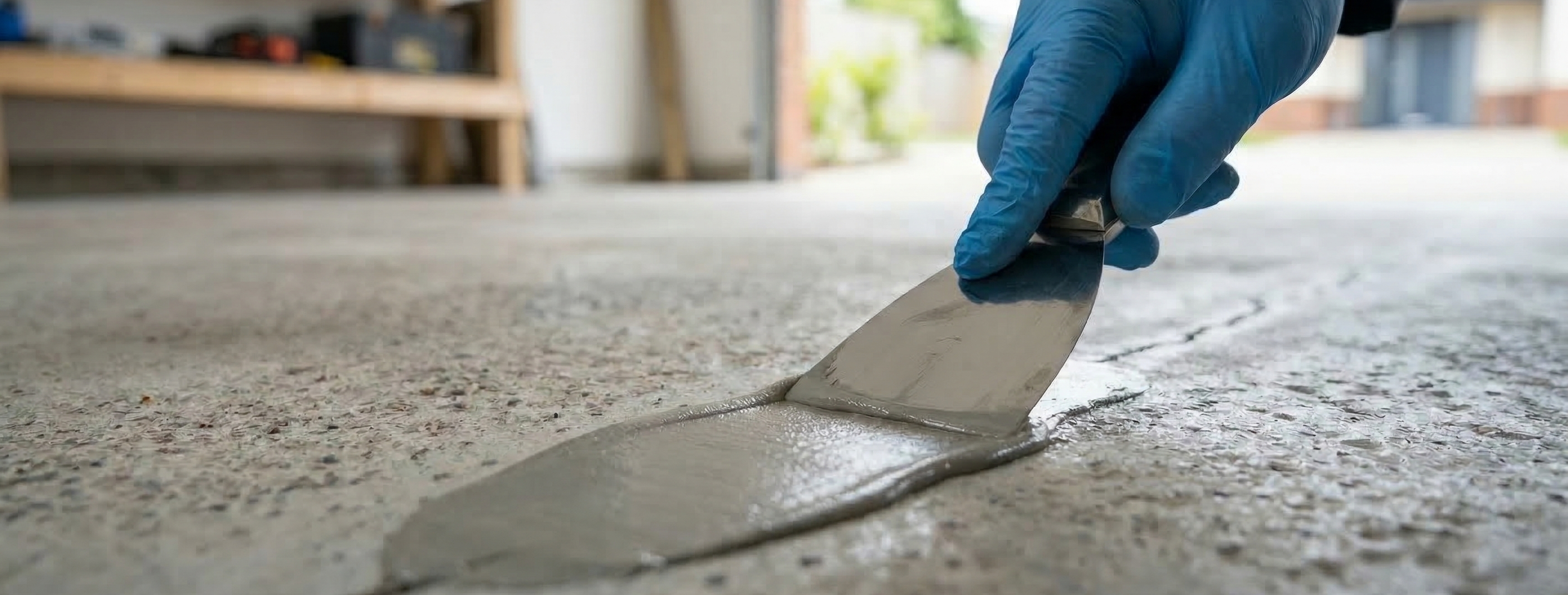
Professional application of concrete patch filler to a floor crack using a stainless steel putty knife.

Repairing Cracks & Pits: Concrete Patching Guide
Paint is a coating, not a filler. This is the hardest lesson for DIYers to learn. If you apply a shiny new Epoxy Floor Paint over a crack, the paint will sink into it. Within a week, that crack will...

Read more

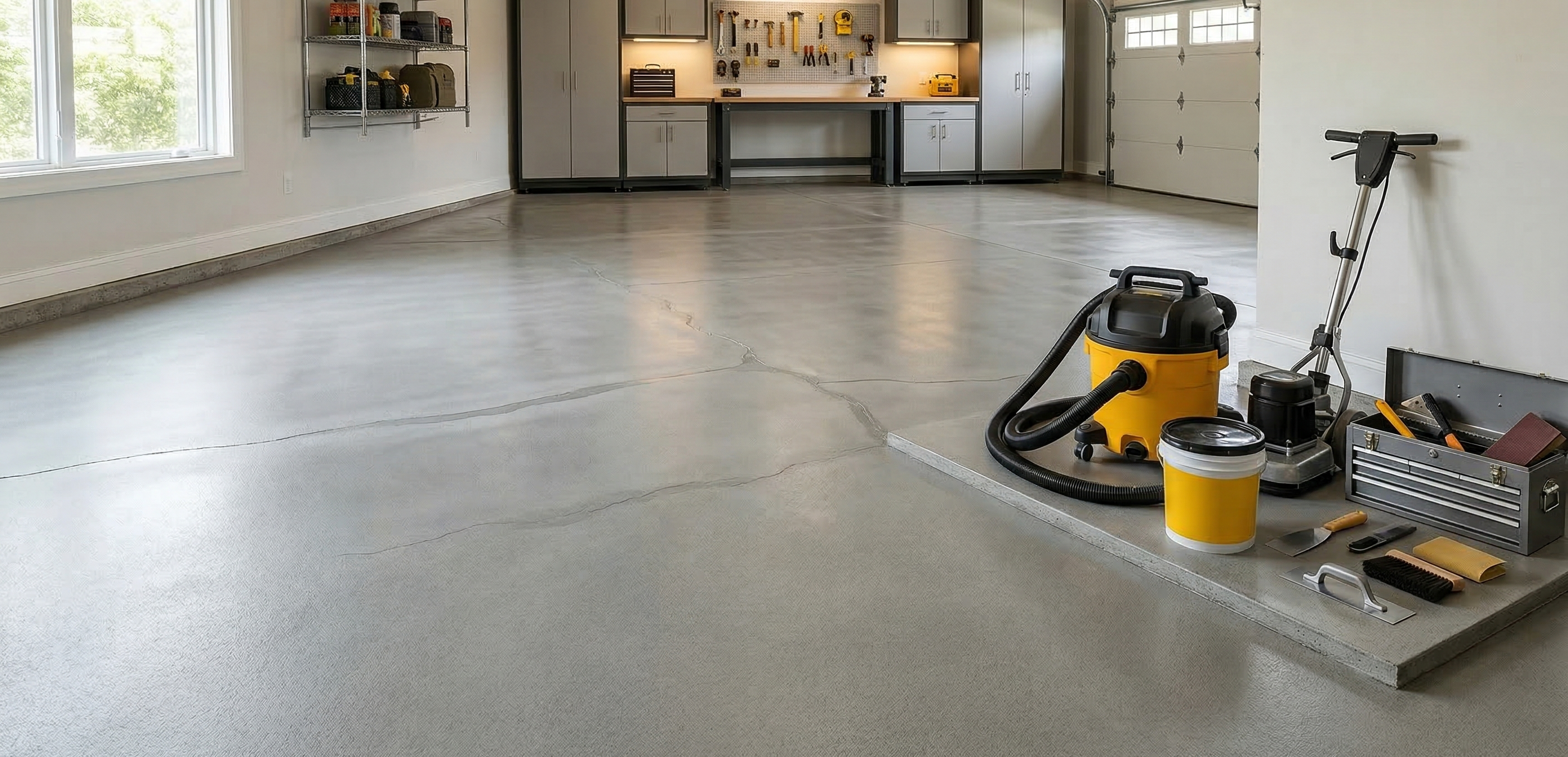
A fully prepped and patched concrete garage floor ready for epoxy coating application.

The Ultimate DIY Garage Floor Prep Guide: Cleaning, Patching, and Profiling
We see the same story every spring. A homeowner spends their weekend painting the garage, it looks fantastic for a month, and then - snap - the hot tyres of the family car rip the paint right off the concrete....

Read more

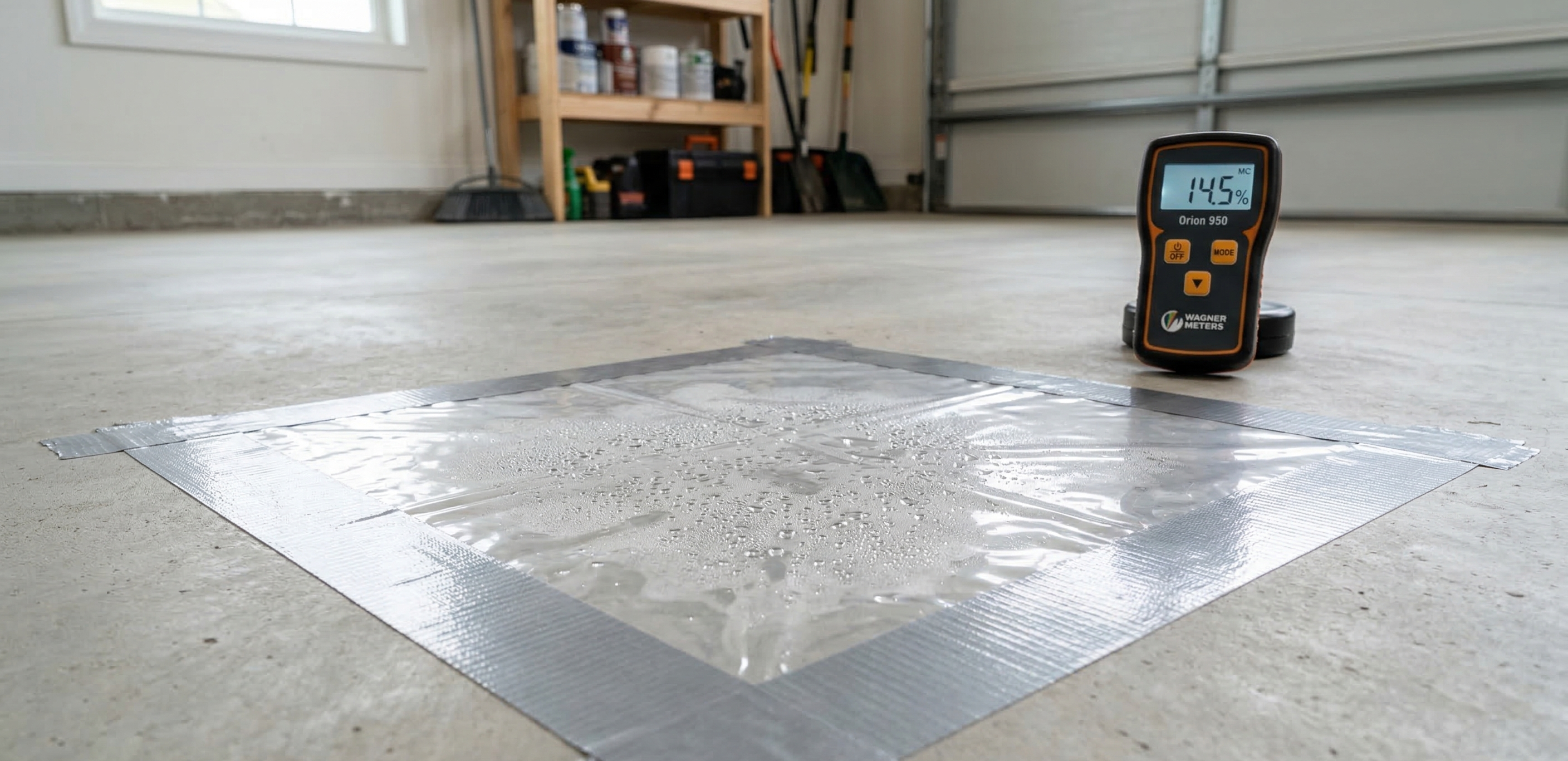
The Moisture Test: How to Check Your Garage Floor for Damp
The Moisture Test: How to Check Your Garage Floor for Damp

Here is a fact that paint manufacturers hate to admit: You can buy the best epoxy in the world, apply it perfectly, and it can still fail within a month. Why? Because of water you can’t even see. If your...

Read more

What is Laitance? Why You Must Remove the Surface Chalk
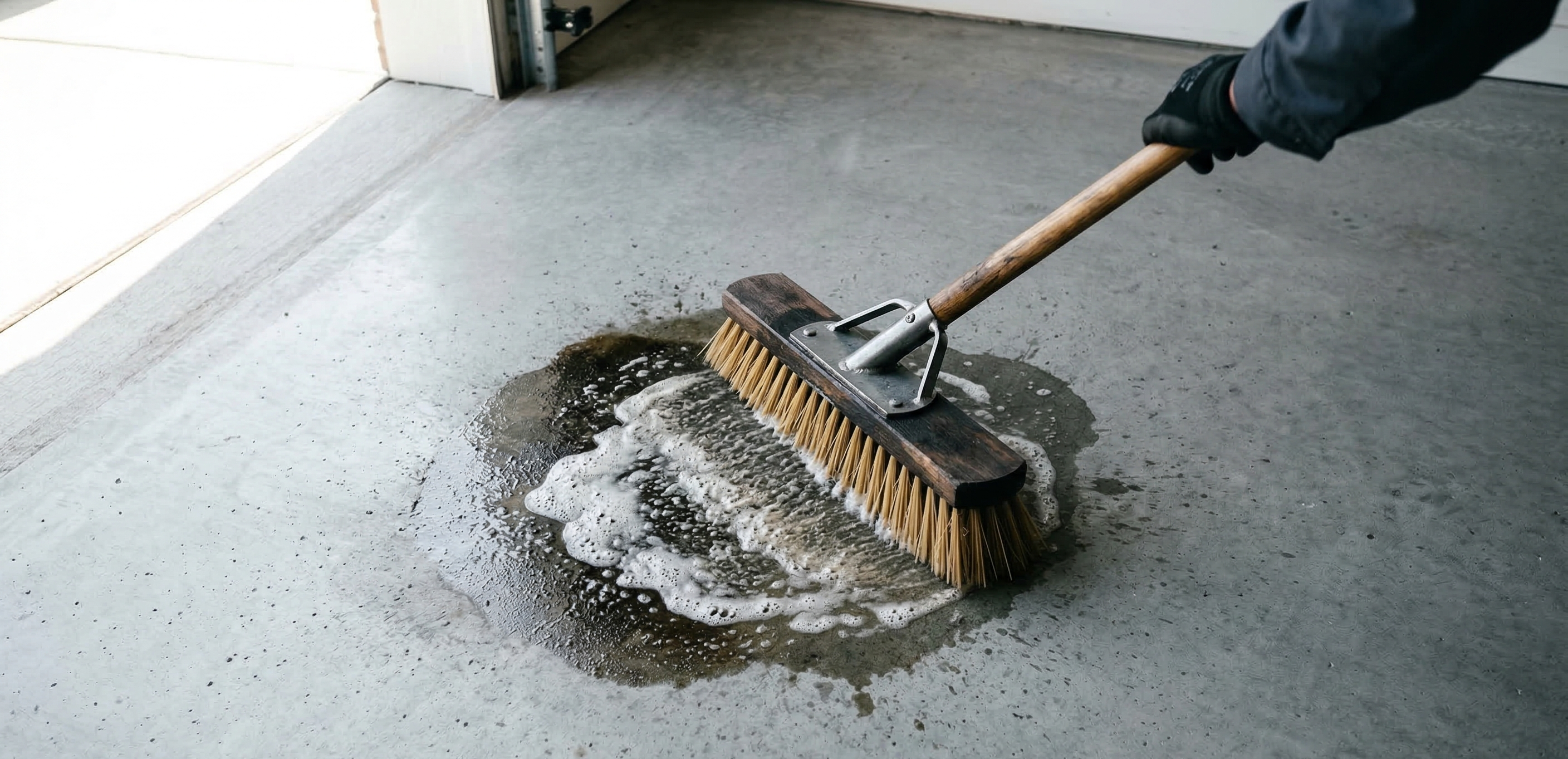
What is Laitance? Why You Must Remove the Surface Chalk

If you have just poured a new concrete floor, it probably looks perfect. It’s smooth, light grey, and feels like glass to the touch.  Unfortunately, that smooth surface is not concrete. It is laitance. And if you paint directly over...

Read more

How to Clean Oil-Contaminated Concrete for Floor Paint
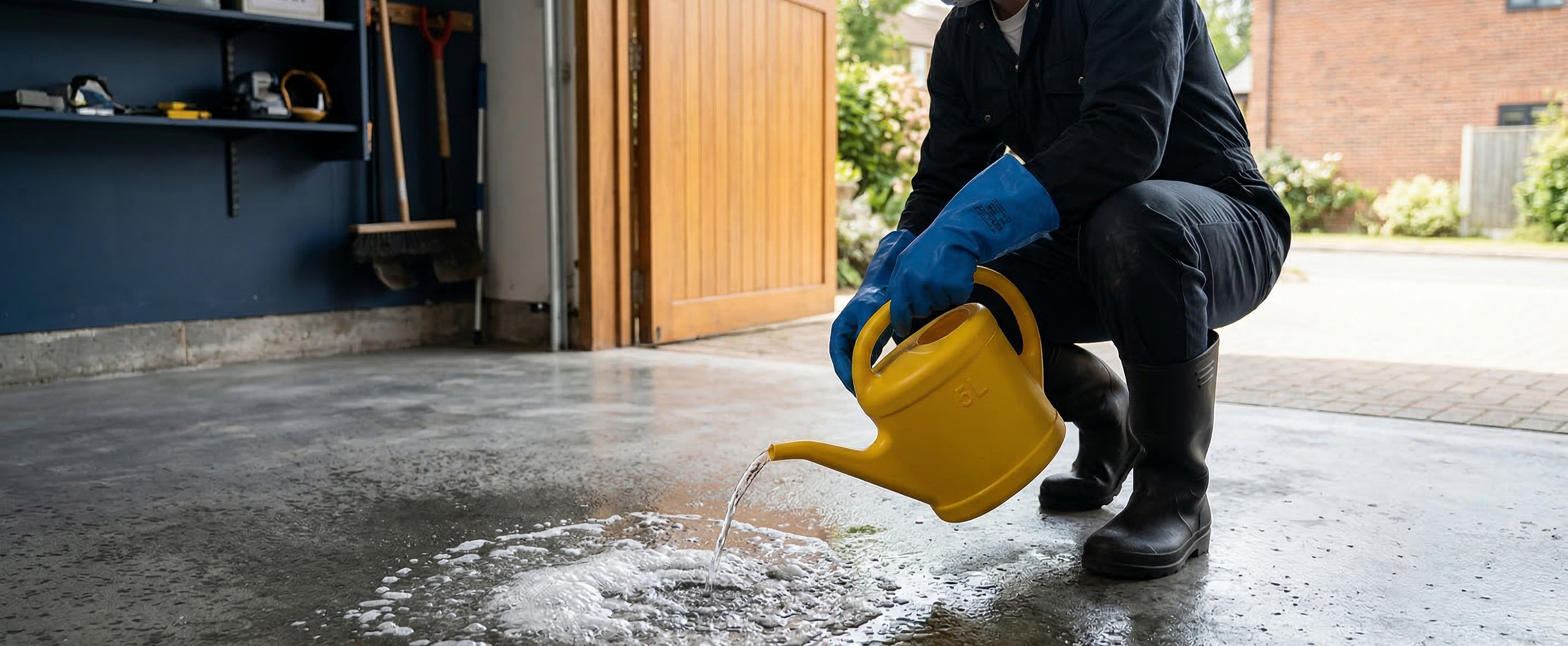
How to Clean Oil-Contaminated Concrete for Floor Paint

Oil stains are the enemy of floor paint. If you apply a resin coating over even a microscopic layer of grease, you are guaranteed adhesion failure. The resin cannot bond to the concrete; it sits on top of the oil,...

Read more

Applying an acid etching solution to a concrete garage floor using proper safety equipment.

When and How to Acid Etch Concrete Safely
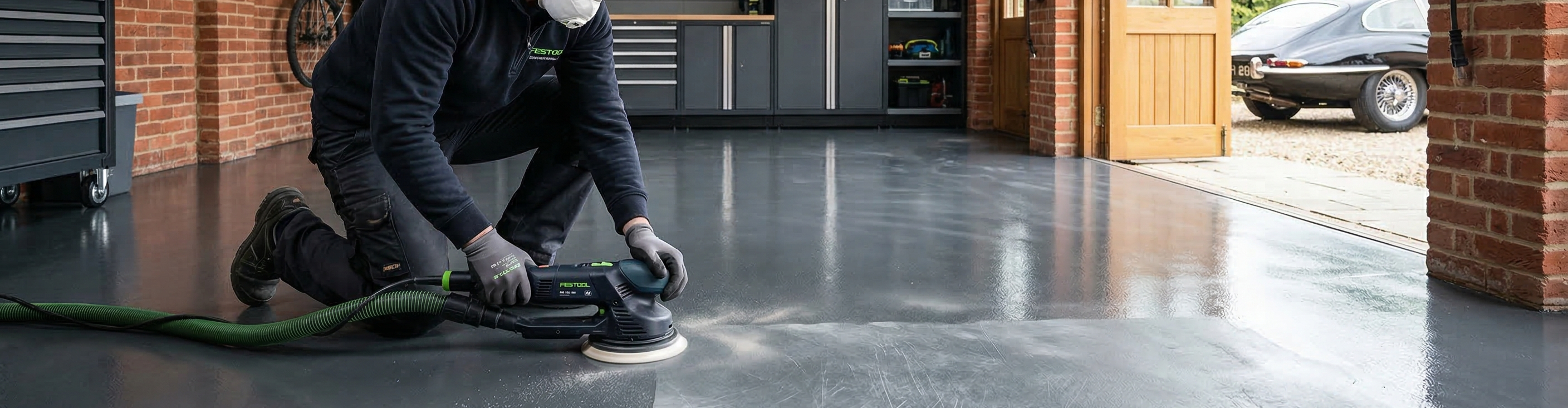
You have bought a High-Performance Epoxy Kit for your garage or an exterior concrete paint for your patio. You are ready to roll it out. Stop. Look at the concrete. Is it smooth? Is it shiny? If you paint directly...

Read more

Sanding an existing epoxy floor with an orbital sander to create a mechanical key for a new topcoat.

Recoating Epoxy: How to Prepare an Existing Floor for a Topcoat
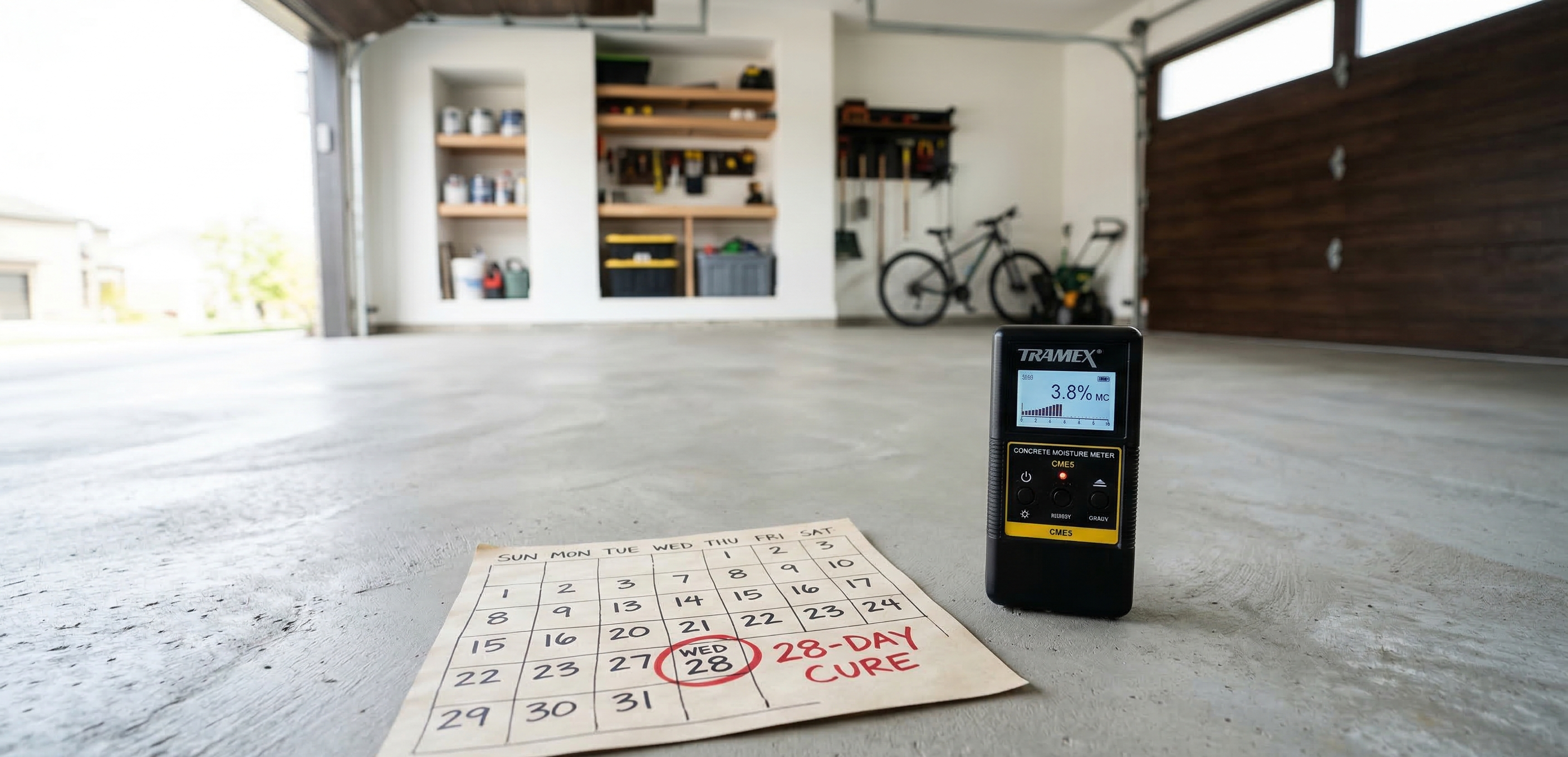
Epoxy floors are incredibly durable, but they aren't invincible. After five or ten years of forklift traffic, even the best system will look scratched, dull, and tired. The good news? You don't need to rip it up and start from...

Read more

Painting New Concrete: How Long You Have to Wait
Painting New Concrete: How Long You Have to Wait

You have just had a new concrete floor poured in your garage or extension. It looks smooth, it looks clean, and after a few sunny days, it looks grey and dry. The temptation to paint it immediately is huge. You...

Read more

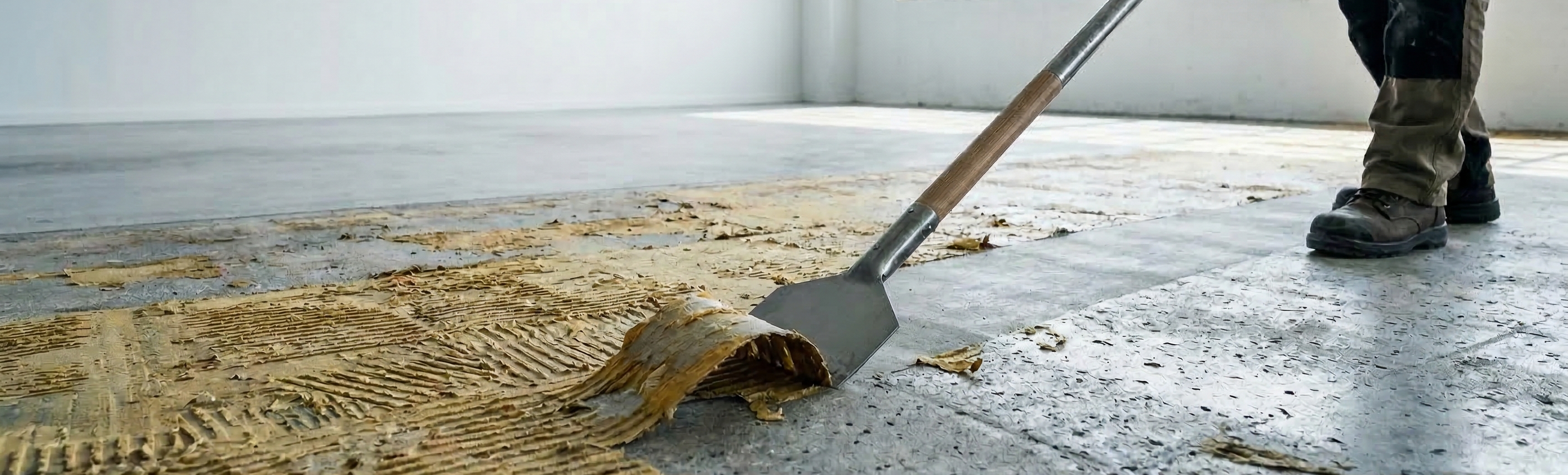
Scraping off old yellow carpet glue from a concrete garage floor using a metal floor scraper.

Removing Stubborn Carpet Glue and Tile Adhesives
You’ve done the hard part. You’ve ripped up the old, out-dated carpet or chipped away the retro vinyl tiles. You were hoping to crack on with painting the floor, but covering your concrete is a yellow, sticky, uneven mess of...

Read more

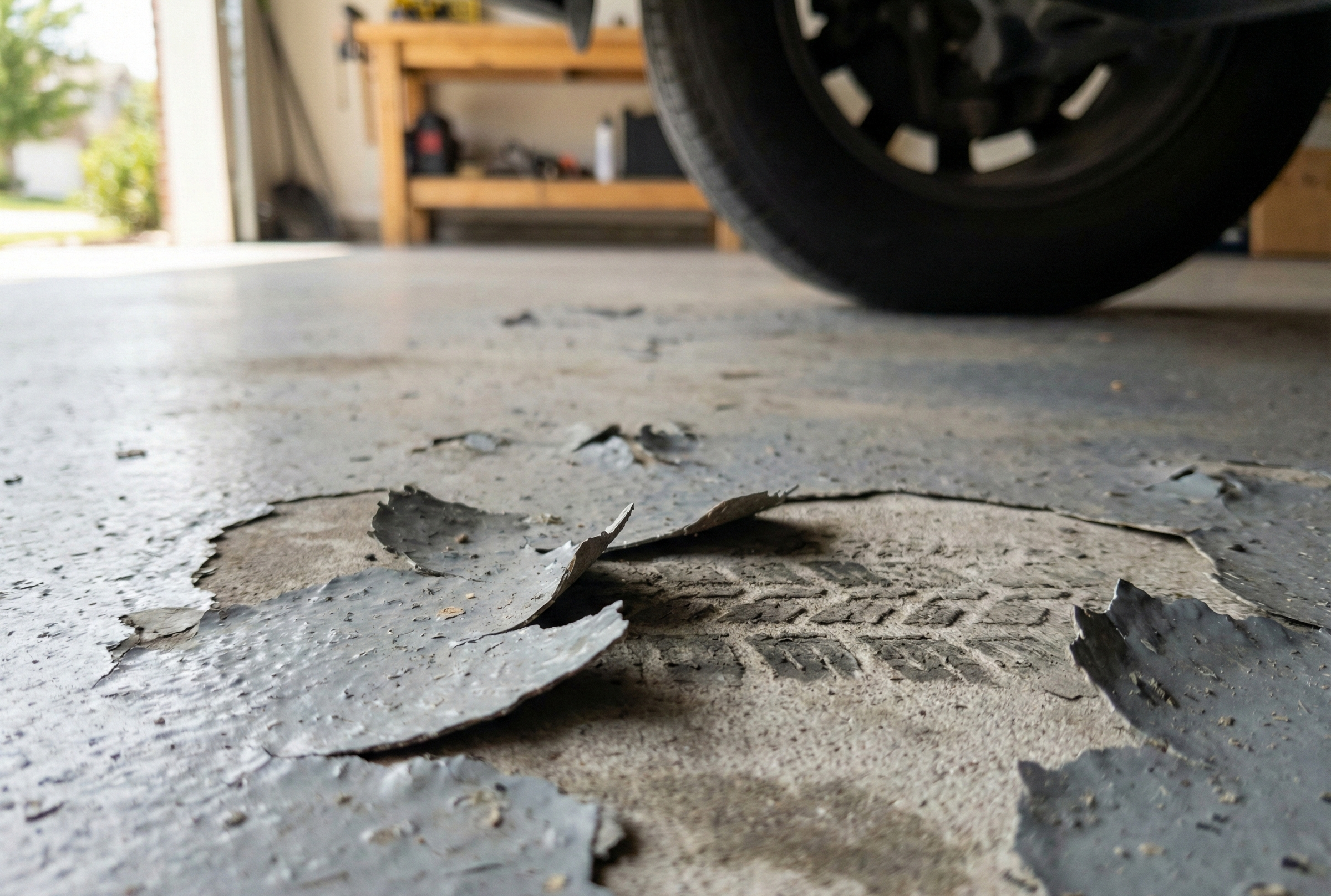
Residential garage floor showing peeling paint and coating damage from hot tire pickup on concrete surface

Preventing Hot Tyre Pickup and Peeling
There is a sound every car enthusiast dreads. You park your car in the garage after a long drive. You come back the next morning, put it in reverse, and hear a loud cracking sound. You get out to look,...

Read more

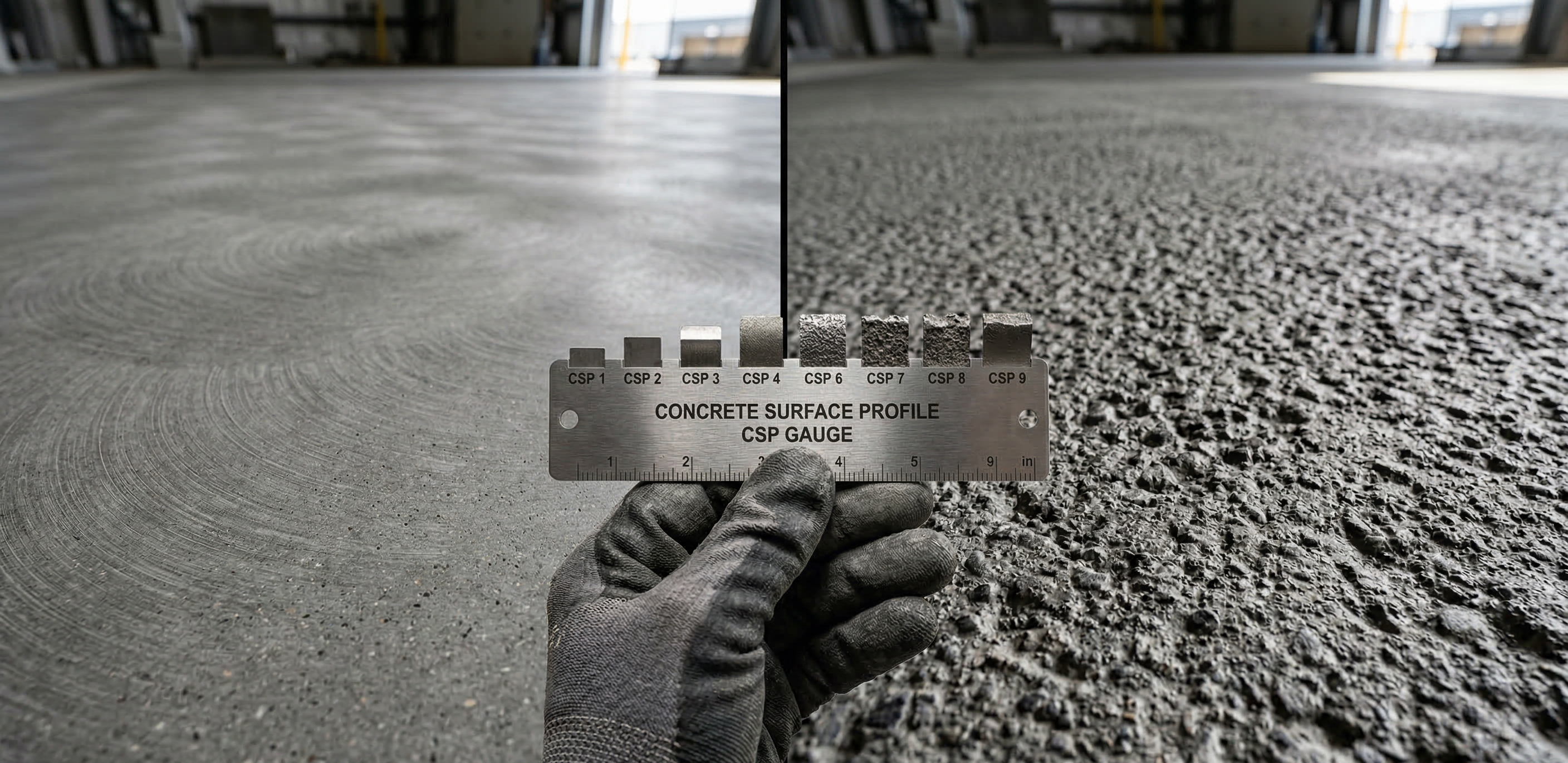
Side-by-side comparison of diamond ground concrete versus shot blasted concrete textures for floor coating prep

Diamond Grinding vs. Shot Blasting: Achieving the Correct Surface Profile (CSP)
If you ask any flooring contractor why a resin floor failed, they likely won't blame the paint. They will blame the prep. In our experience, over 90% of coating failures - peeling, bubbling, and delamination - are caused by poor concrete...

Read more

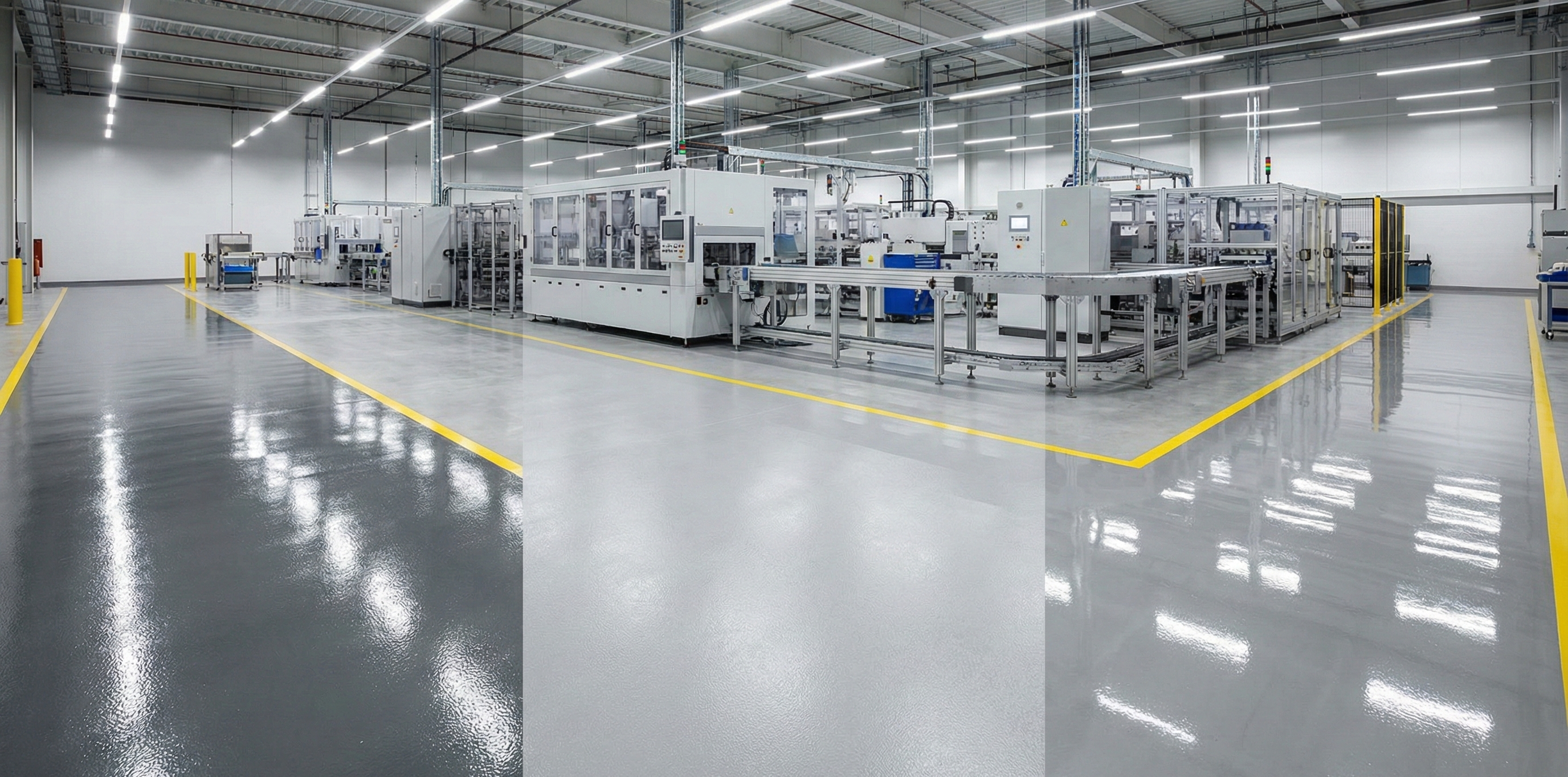
Comparison of industrial floor coating options in manufacturing plant with various protective coating systems

Industrial Floor Coating Systems: A Specification and Selection Guide

Selecting the correct protection for a commercial facility is not as simple as picking a colour. For Facility Managers and Contractors, the difference between a successful project and a costly failure often lies in understanding the technical differences between industrial floor...

Read more

No guides found matching your search.

Try a different keyword.

For Warehouses, Factories & Large Scale Contracts

Industrial & Heavy Duty Floor Preparation

Technical guides for professional contractors. Learn the correct protocols for managing powerfloated concrete, structural expansion joints, and large-scale mechanical preparation.

How to Clean Oil-Contaminated Concrete for Floor Paint

How to Clean Oil-Contaminated Concrete for Floor Paint

Oil stains are the enemy of floor paint. If you apply a resin coating over even a microscopic layer of grease, you are guaranteed adhesion failure. The resin cannot bond to the concrete; it sits on top of the oil,...

Read more

Applying an acid etching solution to a concrete garage floor using proper safety equipment.

When and How to Acid Etch Concrete Safely

You have bought a High-Performance Epoxy Kit for your garage or an exterior concrete paint for your patio. You are ready to roll it out. Stop. Look at the concrete. Is it smooth? Is it shiny? If you paint directly...

Read more

Side-by-side comparison of diamond ground concrete versus shot blasted concrete textures for floor coating prep

Diamond Grinding vs. Shot Blasting: Achieving the Correct Surface Profile (CSP)

If you ask any flooring contractor why a resin floor failed, they likely won't blame the paint. They will blame the prep. In our experience, over 90% of coating failures - peeling, bubbling, and delamination - are caused by poor concrete...

Read more

Comparison of industrial floor coating options in manufacturing plant with various protective coating systems

Industrial Floor Coating Systems: A Specification and Selection Guide

Selecting the correct protection for a commercial facility is not as simple as picking a colour. For Facility Managers and Contractors, the difference between a successful project and a costly failure often lies in understanding the technical differences between industrial floor...

Read more

DIY Friendly Guides for Homeowners

Garage & Workshop Floor Preparation

Achievable, step-by-step methods to get professional results using accessible tools. Perfect for residential garages, home workshops, and small commercial units.

Professional application of concrete patch filler to a floor crack using a stainless steel putty knife.

Repairing Cracks & Pits: Concrete Patching Guide

Paint is a coating, not a filler. This is the hardest lesson for DIYers to learn. If you apply a shiny new Epoxy Floor Paint over a crack, the paint will sink into it. Within a week, that crack will...

Read more

A fully prepped and patched concrete garage floor ready for epoxy coating application.

The Ultimate DIY Garage Floor Prep Guide: Cleaning, Patching, and Profiling

We see the same story every spring. A homeowner spends their weekend painting the garage, it looks fantastic for a month, and then - snap - the hot tyres of the family car rip the paint right off the concrete....

Read more

The Moisture Test: How to Check Your Garage Floor for Damp

The Moisture Test: How to Check Your Garage Floor for Damp

Here is a fact that paint manufacturers hate to admit: You can buy the best epoxy in the world, apply it perfectly, and it can still fail within a month. Why? Because of water you can’t even see. If your...

Read more

Residential garage floor showing peeling paint and coating damage from hot tire pickup on concrete surface

Preventing Hot Tyre Pickup and Peeling

There is a sound every car enthusiast dreads. You park your car in the garage after a long drive. You come back the next morning, put it in reverse, and hear a loud cracking sound. You get out to look,...

Read more

Fixing Damp, Oil, Dust & Soft Surfaces

Troubleshooting Common Concrete Issues

Don't paint over a problem. Diagnose and fix underlying issues—such as rising damp, deep oil stains, or weak "dusting" concrete—before you apply your coating.

Identifying dusting concrete on a UK garage floor by checking for white chalky residue on fingertips.

Dealing with "Dusting" Concrete: Hardening Weak Surfaces

You sweep your garage floor on Saturday morning. By Sunday afternoon, there is a fine layer of white grit covering your car again. You blame the wind, or dirt tracking in from outside. But if you look closely, that grit...

Read more

What is Laitance? Why You Must Remove the Surface Chalk

What is Laitance? Why You Must Remove the Surface Chalk

If you have just poured a new concrete floor, it probably looks perfect. It’s smooth, light grey, and feels like glass to the touch.  Unfortunately, that smooth surface is not concrete. It is laitance. And if you paint directly over...

Read more

Preparation for Previously Painted Floors

Renovation & Recoating Preparation

How to ensure new paints sticks to old paint. Learn how to perform compatibility tests, correct sanding techniques, and decide when to spot-prime versus strip completely.

How to Sand a Painted Concrete Floor for Recoating

How to Sand a Painted Concrete Floor for Recoating

In our Sanding vs. Grinding: Preparing Previously Painted Concrete guide, we established that if your floor passes the Cross-Hatch Adhesion Test, then the next step for recoating will be sanding. Choosing to sand rather than grind saves you hundreds of pounds in equipment rental and diamond consumables....

Read more

Comparing orbital sanding and diamond grinding to prepare a previously painted concrete floor in the UK.

Sanding vs. Grinding: Preparing Previously Painted Concrete

When you are faced with a floor that is already painted, you have a critical decision to make. Do you rough it up and paint over it? Or do you strip it back to the bare concrete and start fresh?...

Read more

Pouring a professional self-leveling compound onto an uneven concrete garage floor in the UK.

Restoring Uneven Floors with Self-Levelling Compounds

There is a hard rule in the flooring industry: High-gloss paint shows everything. If your garage floor is pitted, wavy, or rough like a moonscape, applying a shiny Epoxy Floor Paint will not hide those imperfections. It will highlight them. The...

Read more

Sanding an existing epoxy floor with an orbital sander to create a mechanical key for a new topcoat.

Recoating Epoxy: How to Prepare an Existing Floor for a Topcoat

Epoxy floors are incredibly durable, but they aren't invincible. After five or ten years of forklift traffic, even the best system will look scratched, dull, and tired. The good news? You don't need to rip it up and start from...

Read more

Painting New Concrete: How Long You Have to Wait

Painting New Concrete: How Long You Have to Wait

You have just had a new concrete floor poured in your garage or extension. It looks smooth, it looks clean, and after a few sunny days, it looks grey and dry. The temptation to paint it immediately is huge. You...

Read more

Scraping off old yellow carpet glue from a concrete garage floor using a metal floor scraper.

Removing Stubborn Carpet Glue and Tile Adhesives

You’ve done the hard part. You’ve ripped up the old, out-dated carpet or chipped away the retro vinyl tiles. You were hoping to crack on with painting the floor, but covering your concrete is a yellow, sticky, uneven mess of...

Read more

Quick Help

Concrete Floor Preparation FAQs

General Preparation & Timing

Use this section for any descriptive text you need to fill out your pages or to add introductory headings between other blocks.

How long do I need to wait before painting new concrete?

You must allow new concrete to cure fully to release excess moisture. The industry standard is 4 weeks per inch of concrete depth. For a standard 4-inch slab, this means waiting roughly 3–4 months. We strongly recommend testing the moisture content; it must be below 75% Relative Humidity (RH) before applying any resin coating.

Do I really need to use a primer?

Yes. Concrete is like a sponge—it is porous. If you apply a topcoat directly, the concrete will suck the resin in, leaving the surface weak and likely to peel. A dedicated primer seals the substrate, prevents air bubbles (pin-holing), and creates a sticky surface for your topcoat to bond to.

Methods (Grinding vs. Etching)

Use this section for any descriptive text you need to fill out your pages or to add introductory headings between other blocks.

Can I use Acid Etch on powerfloated concrete?

No. Powerfloated concrete (smooth, shiny finish) is too dense for acid to penetrate effectively. You must use mechanical preparation (diamond grinding or shot blasting) to break the "surface tension" and create a key. Using acid on a powerfloated floor is the #1 cause of coating failure in industrial settings.

Is Acid Etching as good as Diamond Grinding?

For light-duty residential garages, Acid Etching is an acceptable DIY method if the concrete is open and porous. However, Diamond Grinding is superior in every way. It removes weak surface laitance, levels bumps, and guarantees the perfect mechanical profile for the paint to grip.

Troubleshooting (Damp & Oil)

Use this section for any descriptive text you need to fill out your pages or to add introductory headings between other blocks.

Can I paint over oil stains if I clean them first?

You cannot simply wash oil off the top; you must draw it out. Oil penetrates deep into the concrete capillaries. We recommend using a high-strength Industrial Degreaser and scrubbing vigorously. For deep stains, multiple treatments may be needed. If oil remains, the paint will not stick to that specific spot.

How do I know if my floor has a Damp Proof Membrane (DPM)?

If your floor was built before the 1980s, it likely lacks a DPM. To check, tape a square of clear plastic sheeting to the floor and leave it for 24 hours. If the concrete under the plastic looks dark or has water droplets, you have rising damp. In this case, you must use a "Surface Damp Proof Primer" before painting.

Recoating Old Floors

Use this section for any descriptive text you need to fill out your pages or to add introductory headings between other blocks.

Can I paint over existing floor paint?

Only if the existing paint is sound (not flaking) and compatible. You should perform a Solvent Rub Test: rub the old paint with a rag soaked in Xylene. If the old paint softens or dissolves, it is a single-pack paint, and you cannot put a heavy-duty epoxy over it. If it stays hard, just sand it down to create a key, clean it, and recoat.

What is "Laitance" and why must I remove it?

Laitance is a weak, milky layer of cement dust and water that rises to the top of curing concrete. It looks solid, but it is very brittle. If you paint over it, the paint will stick to the laitance, and the laitance will snap off the concrete, causing your floor to peel in sheets. It must be removed via grinding or etching.

Didn’t Find Your Answer?

Don't hestitate to contact us

Workshop table with paint cans, color swatches, and tools in a workshop setting.

The Help & Technical Hub

Our coatings are backed by more than just performance — they’re supported by clear documentation, practical guides, and real technical support.

The Help & Technical Hub brings together preparation guides, application advice, FAQs, SDS & TDS downloads, and system recommendations to help you choose, apply, and maintain the right coating with confidence.

Visit the Help & Technical Hub Contact Technical Support